

The chair of the Liechtenstein Royal family’s global private bank warns investors against turning their backs on ESG investing, declaring those who embrace change will ultimately thrive. Written by Damon Kitney and published in The Australian.
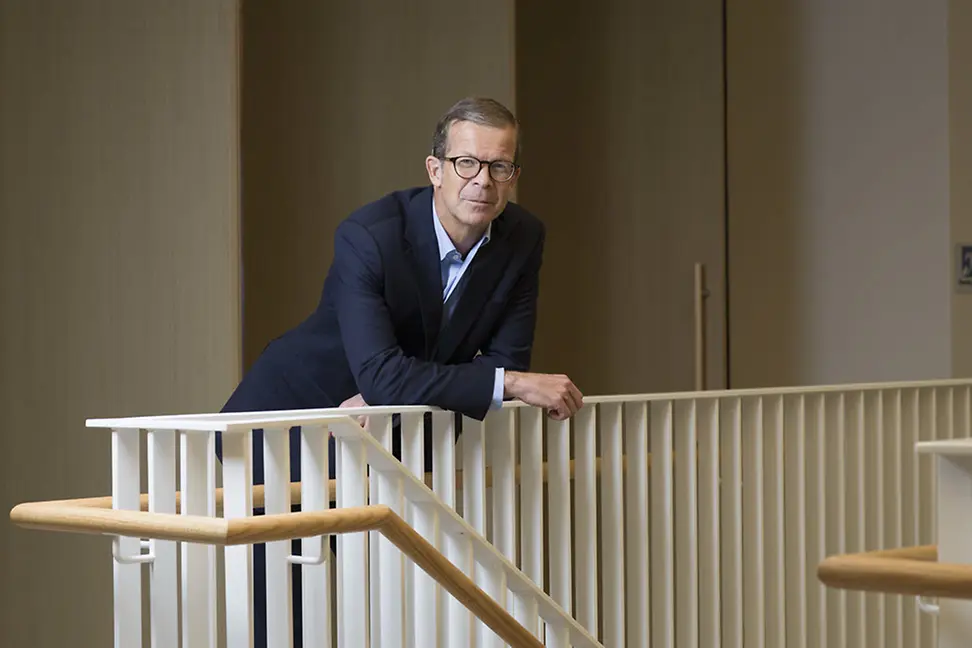
One of the world’s most influential private banking figures, Prince Max von und zu Liechtenstein, says investors would be “shortsighted” to turn their backs on ESG principles, declaring that the world’s environmental challenges are “driven by the physics of climate change” and will not simply “go away”. “Different people associate ESG (environment, social and governance) with different things,” said Prince Max, who visited Sydney last week for the third annual LGT Climate Conference. “From our perspective, to think comprehensively about businesses and to include positive and negative externalities that they create is really important.
The three dimensions of ESG are relevant for every business and should be assessed by smart investors in their investment decisions.” Prince Max is chairman of LGT Group, the Liechtenstein Royal family’s global private bank and fund manager overseeing more than $650bn in assets. While the global backlash against ESG red tape and cost impositions has seen some companies and funds retreat from the principles, the prince cautioned against abandoning them. “Do I think it’s wise to ignore them and wish them away? Of course not,” he told The Australian. “That is very shortsighted and not particularly smart. “The transformation process is already far advanced … It is those companies who have embraced the changes rather than those who have looked away that will thrive.” Prince Max said the climate transition would take time, investment, innovation and would have been smoother had the world acted earlier. “Just think about where the world would be if (former US vice president) Al Gore had been elected in 2004,” he said. “With his deep understanding of these issues at the time, the transition probably would have been way smoother. Now it is more painful.” The Sydney conference, which included Mr Gore and former prime minister Julia Gillard as keynote speakers, reinforced LGT’s long-term commitment to financing the energy transition and fostering dialogue between science, capital and policy.
LGT’s presence in Australia has been expanding rapidly following its 2022 acquisition of Crestone Wealth Management, which has since been rebranded as LGT Wealth Management Australia. Prince Max was CEO of LGT from 2006 to 2021 when he transformed the firm into a 16-country enterprise spanning Europe, North America, Asia and the Middle East. Despite his royal heritage – he is the second son of Prince Hans-Adam II and Countess Marie Kinsky of Liechtenstein – he downplayed the trappings of aristocracy.
He earned an MBA from Harvard University and worked for a decade in private equity on Wall Street before running LGT. “I have never really defined myself as a royal,” he said. “I have defined myself more around the things that I wanted to do rather than a title that I’ve inherited. Naturally, it is a feature of what I represent … it can be helpful in certain circumstances, and less helpful in others.” On the latter, he conceded that growing up with the attention and expectations of royalty could be burdensome at times. “Your natural instinct as a young rookie is always to disappoint the expectations,” he said with a smile, before adding, “but I have been very conscious that my parents did a good job keeping me grounded. I have been very conscious trying to pass that on to my son.”
Regarding the outlook for the global economy, Prince Max said the explosion in government debt was “a real worry” for the world, while he also expressed concern about rising political polarisation and the quality of global leadership. “It makes political decision-making more complicated,” he said. “If we look at the leadership in the three countries with the largest military forces – China, Russia, and the US – one is concerned about how that will play out with these leaders who are not the youngest and have shown to make surprising decisions. Let’s hope they surprise us on the positive side.” Still, he remains optimistic about innovation and human ingenuity. “Investing in good companies remains an attractive proposition,” he said. “When good companies provide good solutions with compelling business models, they will continue to be among the best alternatives in terms of where to put your money.”
Despite the recent controversies in Australia, Prince Max said private credit remained one of the most promising asset classes globally and would play a larger role in clients’ fixed income portfolios going forward. “I hope that the share of fixed income exposure our clients have towards private credit goes up rather than down,” he said. “You find good value there.” In Australia, allocations to private credit have surged as institutional and private investors chase higher yields amid lingering inflation and volatile public markets. The sector has ballooned to more than $200bn in assets under management, with a proliferation of new funds entering the space.
But regulators have stepped up scrutiny of the sector amid concerns that retail and wholesale investors may not fully understand the underlying risks, particularly as global credit conditions tighten. The Australian Securities and Investments Commission (ASIC) has issued multiple warnings about aggressive marketing, opaque fee structures and insufficient disclosure from private credit fund managers.
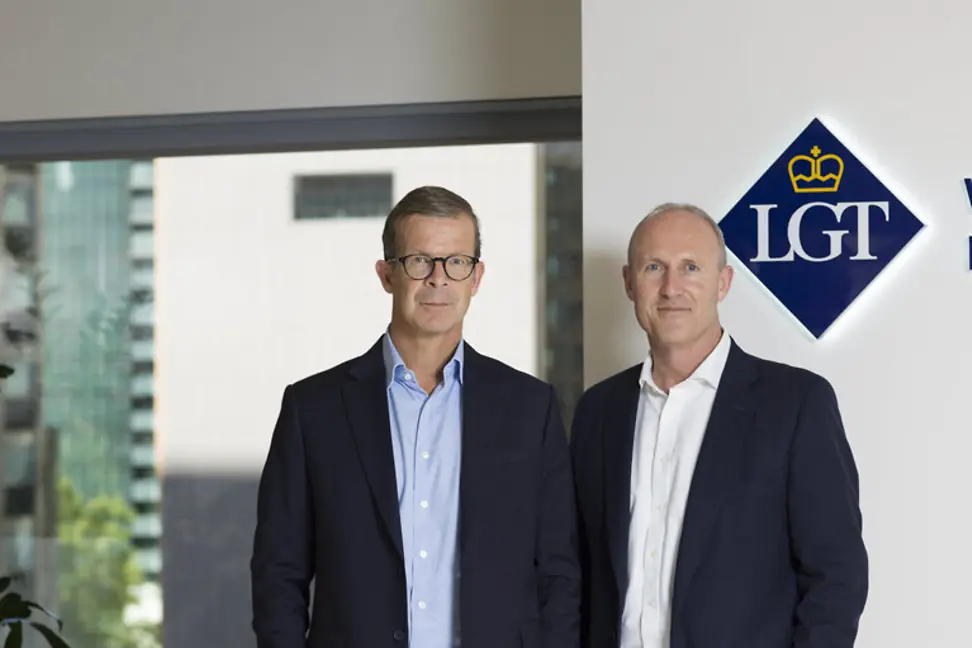
Mike Chisholm, chief executive of LGT Wealth Management Australia, agreed. “Our view locally is that there should be more transparency and visibility,” he said. “That would be great for the sector and improve investor confidence. It really highlights the need for in-house diligence and expertise, understanding the managers. Things are good when the economy’s good, but economies go in cycles. “You want to be with managers who have managed through at least one or more cycles. As more private investors enter private markets, it puts a greater onus on the private wealth business to do the due diligence, deciding which funds are trustworthy, which managers we know well.” As technology reshapes financial services, Prince Max is confident the next great differentiator will be artificial intelligence, but only for firms that know how to combine it effectively with human understanding.
“AI is an incredibly powerful muscle that will provide additional efficiency and information to clients and relationship managers,” he said. “To win over the next 10 years, you need cutting-edge AI competence and a digital interface with clients, in addition to excellent advisory capacity. Our clients want both.” He said LGT was investing heavily in building that “digital and AI muscle”, not to replace people, but to empower them. But he was adamant that AI would never replace emotional intelligence. “At the very low end, you will have avatars answering basic questions. But will they have empathy, psychological understanding of families, or access built up over decades? No. AI is not very good on empathy,” he said.
Receive ongoing access to LGT Wealth Management’s insights and observations - a curated stream of thought leadership, market perspectives, and strategic updates designed to inform sophisticated investors.