

This article was originally published via the AFR.
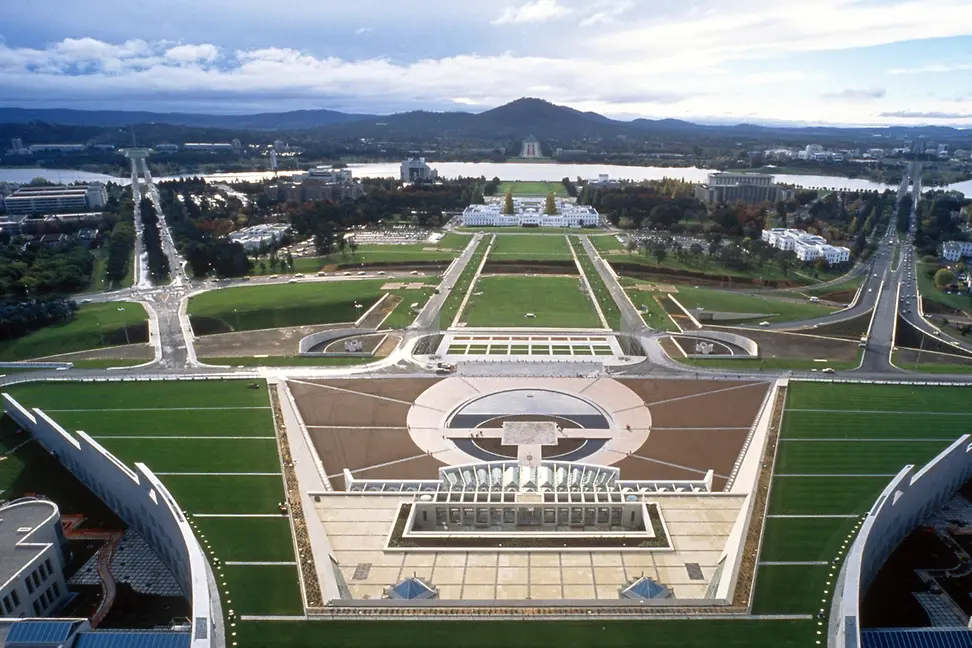
Australians will head to the polls in the coming months and although no official date has been set, the election has to be held by May 17. Many experts are tipping a mid-April poll.
Elections invariably fuel investor uncertainty, particularly in the lead-up to election day. Yet, historical data provides little support for this concern.
Over the past 35 years, Australia has held 12 federal elections. During that period, the domestic equity market has risen, on average, about 9 per cent a year, delivering only eight "down" years. Only two of these were in an election year (the early 1990s recession and 2022).
In what may come as a surprise, of the 12 years in which an election was held, not only was the calendar-year performance positive in 10 of those years, but the average return was also significantly better than normal, rising about 14 per cent (the median increase was 13 per cent).
With the ASX200 already up 4 per cent to 5 per cent for the year, and a rate cut this month with more possible in May and August, this year could well be shaping up as an entirely "consistent" election year for Australian equities.
Is there any benefit for investors in sitting out the market, or delaying deployment, until after the election result is known? Our analysis would suggest no.
Looking at the past 12 election cycles, only three episodes (1990, 1998 and 2001) had negative three-month returns before the election. On average, however, the three-month return before an election is +3 per cent (or 12 per cent annualised).
This analysis probably understates the probability of success. In two of those three negative instances, global markets were dealing with big exogenous shocks. For example, before the October 1998 election, the Russian government defaulted and devalued the ruble, and long-term capital management collapsed, causing markets to fall roughly 20 per cent in just three months.
Similarly, in the run-up to the November 2001 election, the September 11 terrorist attacks on the World Trade Centre and the Pentagon rocked global markets, and the dotcom bubble continued to weigh heavily on investor sentiment.
Excluding these two episodes would mean the average three-month pre-election return increases to about 4.5 per cent, with a 90 per cent historical success rate (that is, a positive return in nine out of 10 episodes).
Post-election data is more mixed. While average returns are positive (+2.2 per cent) three months after the result, 50 per cent of the time (six elections), returns have been negative.
If we exclude the November 2007 election from the dataset (when global markets peaked in October and Bear Sterns was in the midst of free-fall), we find that the average three-month, post-election return rises to about 3.5 per cent. Importantly, the worst performance excluding the 2007/08 experience was just -1.5 per cent, during the 1990s recession.
Recent elections provide an even clearer picture. In the past four elections, equity markets have been typically strong in the lead-up (10 per cent in 2013, 5 per cent in 2017, 6 per cent in 2019 and flat in 2022), but post-election performance was much more subdued (+0.8 per cent, -0.6 per cent, -0.6 per cent and -0.1 per cent respectively).
A frequent discussion during election cycles is the role the Reserve Bank of Australia might have on elections, with interest rates often viewed as an influence on the electoral conscience. The reality, however, is that the RBA acts independently of the electoral cycle.
Over the past 12 elections, the RBA adjusted rates eight times - three times during the campaign and five times close to election dates.
Rather than focusing on election uncertainty, investors should stay focused on the fundamentals.
Recent analysis by investment bank Barrenjoey concurs, concluding: "Australian federal election(s) have limited - if any - sustained impact on equity market performance, the RBA, the economy, or confidence."
Its analysis did, however, find some evidence to suggest that small caps tend to outperform large caps after elections, probably because of the greater domestic focus of smaller companies and the uncertainty premium leading up to the election.
In fact, the ASX Small Ordinaries Index has averaged a 6.8 per cent return during election years, close to its 35-year annual average return of 6.6 per cent. After adjusting for factors such as the economic cycle at the time of the election, government changes and other exogenous shocks (for example, the pandemic or global financial crisis), Barrenjoey again found no statistically meaningful influence on business conditions or consumer behaviour.
It is often assumed that election uncertainty hinders economic growth. However, since 1980, economic growth has typically been stronger in election years than the average as a whole.
Many a commentator will opine over the coming months on the differing election promises, their impact on economic growth and the implications for retirement savings returns.
Perhaps we might all be better expressing our dismay at a three-year electoral cycle that corrals our politicians into short-termism, negating any meaningful policy change that might boost productivity, real economic growth and, ultimately, prosperity.
Rather than focusing on election uncertainty, investors should stay focused on the fundamentals: corporate earnings, RBA rate cuts, China's economic outlook and the unpredictability of Donald Trump's trade policies.
In the end, these factors will have a far greater impact on investment decisions than who wins the next election.
Receive ongoing access to LGT Wealth Management’s insights and observations - a curated stream of thought leadership, market perspectives, and strategic updates designed to inform sophisticated investors.