When a small group of companies drives share market returns, diversification can be harder to achieve, and many active managers can struggle to keep pace. Our response is to be more selective about where we use active management and what we expect it to achieve. Combining diversified core strategies with managers that offer different investment approaches and sources of return. This gives us flexibility as market conditions change, while keeping costs and risks in focus.
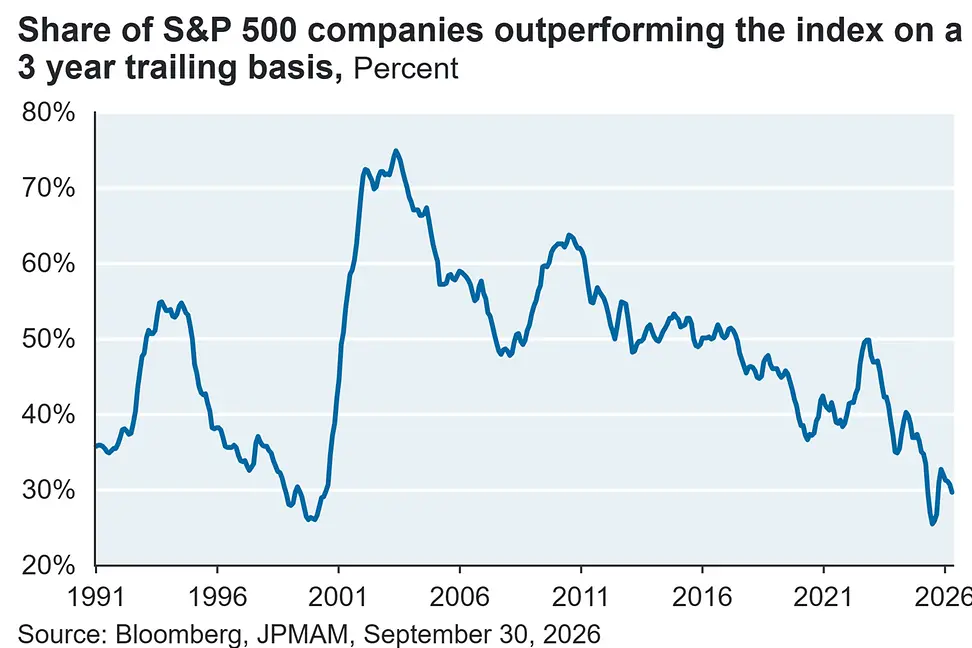
A market index may hold hundreds of companies, but its performance can still depend heavily on a handful of large stocks. In recent years, the rise of artificial intelligence (AI) has helped concentrate global equity market leadership in large technology companies.
This creates a challenge for investors. An equity portfolio that follows the index can have significant exposure to those leaders. An active manager that holds less of them may lag the index, even when its other investments perform reasonably well. So how can you solve this problem? We look beyond the headline and consider the underlying holdings, the risks they share and whether each manager contributes something different.
Our manager selection approach aims to offer a full spectrum, from core holdings to complementary allocations. The core provides broad exposure to markets. The satellites allow us to add managers with more distinctive investment ideas or approaches.
Within our core range, we have expanded the choice of quantitative and enhanced index strategies. These use systematic analysis to select and weight investments. Enhanced index strategies generally stay relatively close to the market index, while seeking modest additional returns. More active quantitative strategies have greater freedom to differ from benchmarks.
These approaches can provide diversified market exposure at a competitive cost. Their role is really to provide a foundation around which we can make more deliberate choices about additional active exposure.
Alongside the core, we are looking for managers whose investment decisions can add a different source of return. That may involve a stronger valuation discipline, a focus on smaller companies, a different geographic opportunity set or a more concentrated portfolio of high conviction ideas.
The aim is to ensure each allocation earns its place. We assess what critical risks and benefits a new manager introduces and decide if we want that desired outcome. Analysing the overlap created and whether the potential benefit justifies the fees and risks. As differentiated strategies’ performance can decouple for extended periods of time, understanding the relevant investment approach and setting realistic expectations are essential.
Selecting a manager also means assessing the business behind the strategy. Strong investment ideas need a stable team and the resources to put them into practice.
We examine ownership, financial sustainability, assets under management, investor flows, team stability and succession planning. Persistent outflows can reduce revenue and put pressure on staffing and resources. This matters because business disruption can affect the people and process on which an investment depends.
Smaller independent managers can still offer valuable expertise and differentiated ideas. Size alone does not determine quality. Ultimately, we want confidence that the business can support its investment approach through difficult periods.
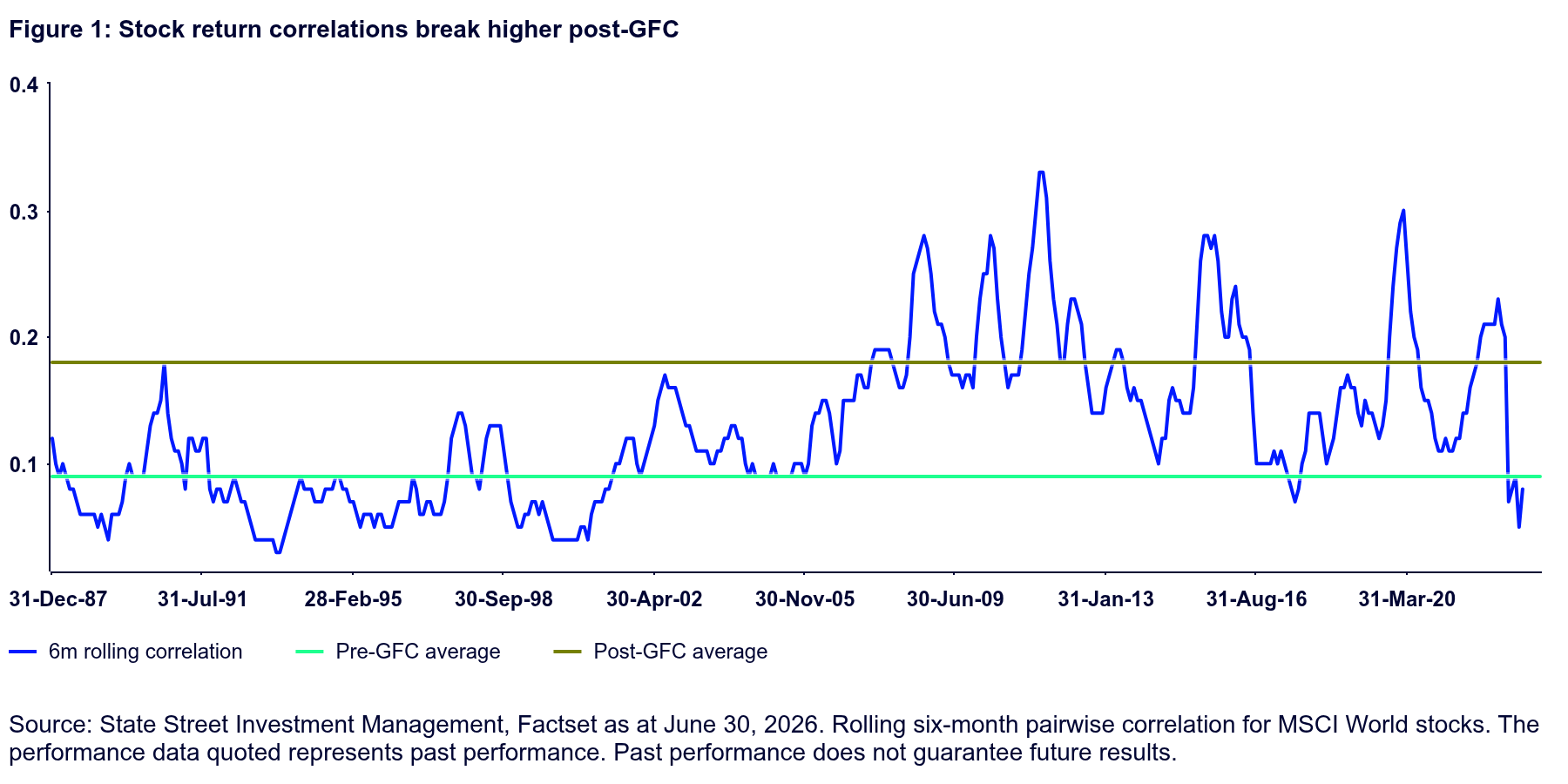
When markets express signs of a broader opportunity set, including greater differences in returns between stocks and investment styles, managers may have more opportunities to distinguish stronger businesses from weaker ones and identify attractive valuations. We have experienced more dispersion in markets this year. This does not guarantee that active managers will outperform and greater differences in outcomes also make manager selection more consequential. We need to distinguish temporary headwinds from weaknesses in the investment process and remain disciplined about the managers we retain.
Our approach is designed to keep portfolios adaptable. A diversified core provides broad market exposure, while carefully selected complementary managers give us access to opportunities that the core may not capture.
We continue to see a role for active management, with a clear purpose for each allocation. The focus is on the contribution to your overall portfolio, after fees and with a full understanding of the risks, rather than simply adding more funds.
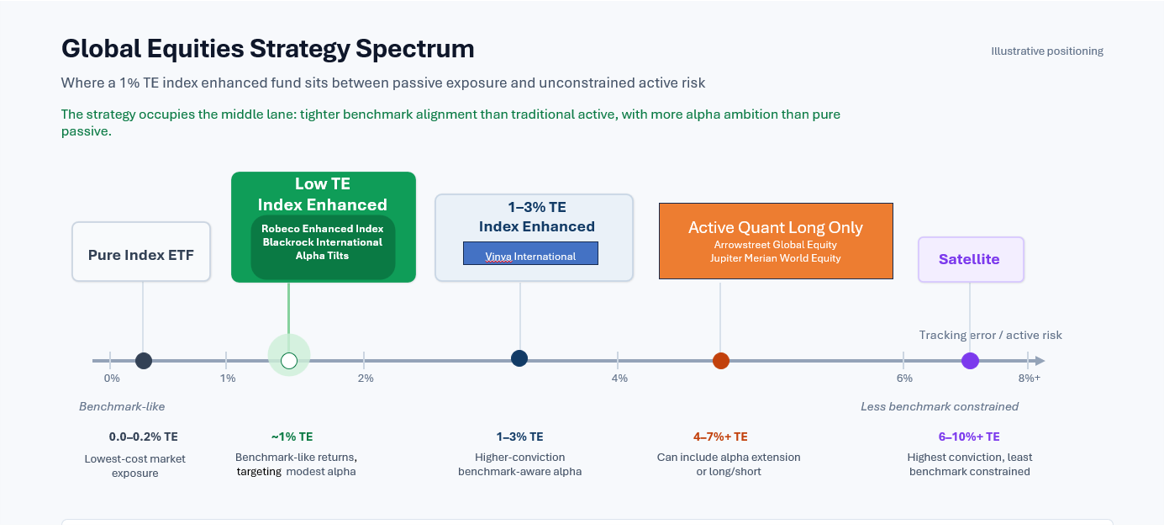
Positioning takeaway: a 1% tracking error1 index enhanced fund offers a benchmark-aware allocation with measurable alpha ambition, while staying materially closer to index characteristics than traditional active strategies.
[1] Tracking error is the measure of how much an investment portfolio or fund's returns bounce around or deviate from its benchmark index.
Receive ongoing access to LGT Wealth Management’s insights and observations - a curated stream of thought leadership, market perspectives, and strategic updates designed to inform sophisticated investors.