Keeping calm under fire:
Key things to watch for as Israel-Iran conflict escalates
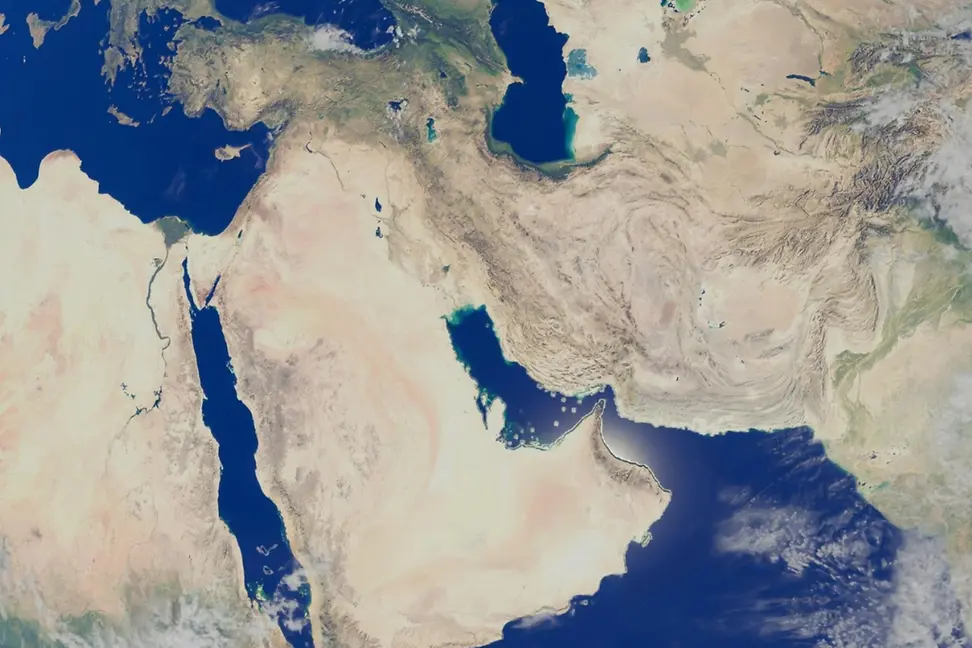
In the early hours of 13 June 2025, Israel launched extensive aerial and covert strikes across Iran, targeting a wide range of nuclear, military, and energy personnel and facilities. Iran has responded with substantial ballistic missile and drone strikes. The conflict appeared to then escalate further over the ensuing days after Israel targeted Iran’s South Pars gas field (the world’s largest). Iran is reportedly considering attempting to disrupt the Strait of Hormuz, through which about 20% of the world’s oil flows. The conflict has prompted risk-off market action over the past few days, with crude oil prices in particular surging as much as 13% as investors digested these developments.
In this Special Report, we:
apply our constraints-based framework to focus on the key macro and market-relevant signposts
consider the near-term outlook through scenario-based analysis
outline the near-term and long-term investment implications stemming from this latest Middle East conflict.
from
Matthew Tan, LGT Wealth Management, Head of Asset Allocation
and
Stan Shamu, LGT Wealth Management Head of Portfolio Management
Israel's lightning strikes across Iran threaten to escalate Middle East tensions significantly.
What we know so far
Israel's rapid strikes have dealt significant damage to Iran's command and control, military, and nuclear capabilities. However, reports are that Iran's most hardened nuclear facilities, including at Fordow and Natanz (which are buried 40m or more under the surface or within mountains), remain broadly intact. Israel has indicated that it intends to continue strikes on Iran, with a primary goal of permanently dismantling its ability to develop nuclear weapons and a secondary goal of fomenting regime change in the country.
Iran has retaliated with a barrage of ballistic missile and drone strikes, though it may soon encounter difficulties sustaining the intensity of the conflict given the damage Israel has inflicted on its capabilities. Meanwhile, the US has directly and clearly stated that it did not participate in any way in the Israeli operation, warned Iran against attacking US assets in the region, and continued to urge Iran to return to the nuclear negotiations that the Trump Administration continues to believe is the best way to move forward.
Markets will be watching for signs of further escalation via further strikes on Iranian energy infrastructure, the Strait of Hormuz, or US assets.
Key signposts to watch
We are clearly in a very fluid and tactically active environment, and deep within the ‘fog of war'. There are significant uncertainties and developments that may substantially change the situation for the better or for the worse. In the immediate-term, investors will be watching for signs of:
further escalation, whether through:
Israeli strikes on more Iranian energy infrastructure, including the Kharg Island Terminal, which handles 90% of Iran's oil exports
An Iranian attempt to disrupt the Strait of Hormuz
Iranian strikes on US assets in the region
either Israel or Iran exhausting their ability to sustain the conflict (modern warfare consumes tremendous amounts of material!), allowing a stabilisation
the US and other powers pushing to achieve a de-escalation
domestic political pressures on either Israel or Iran to de-escalate.
A constraints-based analysis of the key players suggests that a ‘peak’ in hostilities is still the most plausible outcome…
Constraints may force a ‘peak' in hostilities; Trump and Netanyahu's actions will be key
As outlined in our February 2025 Observations piece The New Great Game, we apply a constraints-based framework to assess political and geo-political developments. Developed by Marko Papic of BCA Research, this approach focuses on understanding the material constraints facing policymakers to determine the most likely or plausible courses of action, rather than relying on their stated preferences or fearful newspaper headlines. Of course, the key caveat here is that we are operating off our best assessments of publicly available information, and policymakers may choose not to pursue the most likely course of action.
People make mistakes! However, when a policymaker goes against their material constraints, as US President Trump did on ‘Liberation Day', they learn about it very quickly.
Applying this framework to today's situation suggests that, while each of Israel, Iran, and the US have their own preferences or objectives, the constraints facing them indicate that the most likely course of action is a stabilisation in the conflict:
…Israel needs US support to do more, Iran has suffered extensive damage to its military capabilities, and the US has no intention of becoming embroiled in ‘yet another’ Middle East war outcome…
Israel / Netanyahu
Israel likely seeks a permanent dismantling of Iranian nuclear capabilities and potentially regime change, as well as keeping Prime Minister Netanyahu's right-wing coalition intact
However, it currently lacks the capability to do further significant damage to the most hardened Iranian nuclear facilities without direct US support. It is also rapidly expending its most effective munitions, which will need to be replenished (by the US).
Iran
Iran likely seeks some face-saving retribution on Israel, and to retain some nuclear capabilities as leverage in eventual negotiations with the US
However, it has suffered substantial damage to its command and control and power projection capabilities, while severe damage to its nuclear programme reduces its leverage in negotiations. Iran is also likely close to running out of effective munitions, and in any case its military cannot hope to survive conflict with the US. In 1988, an Iranian attempt to close the Strait of Hormuz ended with the US navy destroying almost the entire Iranian navy within a single day (see Operation Praying Mantis).
US / Trump
The US and Trump likely see a nuclear deal with Iran as the most practical way to achieve lasting de-escalation and ‘peace' in the Middle East. In addition, Trump has declared an aversion to regime change in Iran, as well as a reluctance to involve the US in another military conflict in the Middle East
The constraints facing the US in this instance are likely not binding. It wields overwhelming military supremacy and has the capacity to act swiftly and decisively if it chooses (or is compelled) to do so. That said, the US populace has little appetite for yet another Middle East war, and a sustained oil price spike would significantly damage the US economy and Trump's popular support.
…however it is important to acknowledge that the risk of further escalation is noteworthy
We believe the pivotal, or ‘fulcrum' actors in this case are US President Trump and Israeli PM
Netanyahu. Effectively, the US and Trump hold the key to escalating or de-escalating this conflict, by with- holding support for further Israeli actions or by getting involved directly. Netanyahu can either take the win or seek to goad the US by escalating matters. We see the most likely outcome being that the constraints on all parties eventually force a stabilisation or de-escalation in the conflict that allows for a resumption of US-Iran nuclear negotiations. That said, our scenario analysis indicates that downside risks have clearly risen.
An assessment of plausible scenarios indicates a low but significant tail risk of escalation
The constraints-based analysis above informs our assessment of the most plausible forward scenarios, noting the wide band of assessed likelihoods reflects the extraordinary levels of uncertainty we are dealing with:
(60–80%) Conflict stabilises.
Our central case outcome is that Israel accepts the substantial ‘win' it has already achieved in degrading Iran's capabilities, and allows the US and Trump to re-take the lead in negotiating with a now-weakened Iran. In this scenario, markets will likely ‘move on' from the conflict and re-engage with the prevailing macro risks and uncertainties.
(20–40%) Conflict escalates.
Iranian energy infrastructure, the Strait of Hormuz, and/or US assets serve as a flashpoint for further escalation of the conflict that draws in the US and risks global oil supplies
There is also an extreme tail scenario of regime change in Iran. The implications of this are currently unknown and could present extreme two-way risk to the outlook.
If the conflict escalates drastically from here, we would expect policymakers to backstop economies and markets
What does this mean for economies and markets?
To the casual observer, such an elevated probability of conflict escalation might call for emergency de-risking of portfolios. However, we think that might be the wrong call to make for a few reasons:
Our central case still involves a stabilisation in the conflict, and history tells us that geo-political shocks rarely cause sustained market drawdowns. In fact, across 28 geo-political events since 1956, BCA Research found that after initial drawdowns, markets were on average 9% higher 12 months on. Simply put, markets are heartless creatures that move on quickly
If the conflict were to escalate, we assess a very high probability (80% – 90%) that policymakers will step in to backstop the economy and markets. Trump can release oil from the Strategic Petroleum Reserve to support oil supplies, while the expected spike in oil prices (potentially to US$130/barrel according to JP Morgan) will encourage increased production from US and other producers. Meanwhile, we can expect the Federal Reserve to similarly do its part, likely via emergency liquidity support for markets, and potential emergency Fed rate cuts. The current broadly disinflationary backdrop further supports this. In other words, after an initial (potentially sharp) drawdown, policymaker support is likely to support a market recovery.
Markets are likely to remain volatile until we get a clearer signal that the conflict has ‘peaked'…
Investment Implications
In the immediate term of the next few weeks, we expect elevated market volatility until we get a clearer signal that the ‘peak' of this conflict is in and greater clarity on the outlook. This might mean:
Gold and oil are likely to remain bid on higher geo-political risk premia, though we would be careful of chasing this. Prices have risen substantially already and, as we have experienced in past Middle East conflicts, geo-political risk premia can fade very quickly once uncertainty peaks.
Safe haven currencies (CHF, JPY, and to an extent the USD) are likely to benefit from investor caution. The US dollar would typically be expected to strengthen here (and the AUD weaken), but prevailing macro uncertainties around US trade, US fiscal policy, and US domestic politics are likely to drag it down relative to more traditional safe havens like the yen.
The outlook for bond yields is uncertain, with downward pressure from safe haven flows potentially offset by higher oil prices (and its impact on pushing inflation higher).
Equities, after retracing all of their ‘Liberation Day' losses and with valuations back to historically elevated levels, equities appear vulnerable in the near-term.
…prudent investors should not panic, but focus on maintaining robust portfolios to respond to evolving risks and opportunities
So, what actions should prudent investors take in the wake of this conflict?
As with any bout of market volatility, the first and most important rule of investing is Don't Panic. As we saw during the ‘Liberation Day' volatility in April, markets can and do react violently in both directions to unexpected shocks. We believe that attempting to trade this conflict on a daily basis could prove to be both extremely difficult and expose portfolios to lost future gains.
We continue to advocate that investors assess these events through a disciplined and objective framework, like the one we laid out above, and think prudently about the most appropriate actions to take in line with their long-term investment objectives.
We remain comfortable with our current Tactical Asset Allocation (TAA) tilts and portfolio positioning:
2025 was always going to be a volatile year. Political and geo-political uncertainty, higher volatility, and higher dispersion are key components of our tactical outlook for 2025. We choose to navigate through this volatility with a focus on identifying the opportunities that may emerge.
Diversification is one of the few free lunches in markets. The bouts of volatility this year are a good reminder of this. We continue to emphasise maintaining robust portfolios that are diversified across asset classes and funds, and not overly exposed to any one style or theme to deliver a positive outcome. While a positive correlation between equities and bonds has presented some portfolio construction challenges in recent years, fixed income should underpin portfolios should a risk-off environment. In addition to fixed income, defensive alternatives also provide an additional lever and versatility for portfolios in this environment. We continue to focus on quality and active management, attributes we feel are prudent in higher volatility and higher dispersion markets.
Our central case is that the conflict stabilises without a sustained impact on global oil supplies, and markets re-engage with the prevailing macro and market risks and opportunities, including:
US fiscal policy and the One Big Beautiful Bill Act
US trade negotiations
Inflation and the Federal Reserve
US macro, recession, and earnings risks
Our cautiously optimistic +1 overweight to equities is well positioned for our central case, which is that a peak in US trade uncertainty and continued progress on inflation allows central banks to cut rates to support a modestly slowing global economy.
We retain a slight overweight to global government bonds as a downside risk hedge.
We retain plenty of dry powder to respond to evolving risks and opportunities. Our bias remains to buy on geo-politically induced market weakness.
This document has been authorised for distribution to ‘wholesale clients’ and ‘professional investors’ (within the meaning of the Corporations Act 2001 (Cth)) in Australia only.
This document has been prepared by LGT Wealth Management Limited (ABN 50 005 311 937, AFS Licence No. 231127) (LGT Wealth Management). The information contained in this document is provided for information purposes only and is not intended to constitute, nor to be construed as, a solicitation or an offer to buy or sell any financial product. To the extent that advice is provided in this document, it is general advice only and has been prepared without taking into account your objectives, financial situation or needs (your ‘Personal Circumstances’). Before acting on any such general advice, LGT Wealth Management recommends that you obtain professional advice and consider the appropriateness of the advice having regard to your Personal Circumstances. If the advice relates to the acquisition, or possible acquisition of a financial product, you should obtain and consider a Product Disclosure Statement (PDS) or other disclosure document relating to the product before making any decision about whether to acquire the product.
Although the information and opinions contained in this document are based on sources we believe to be reliable, to the extent permitted by law, LGT Wealth Management and its associated entities do not warrant, represent or guarantee, expressly or impliedly, that the information contained in this document is accurate, complete, reliable or current. The information is subject to change without notice and we are under no obligation to update it. Past performance is not a reliable indicator of future performance. If you intend to rely on the information, you should independently verify and assess the accuracy and completeness and obtain professional advice regarding its suitability for your Personal Circumstances.
LGT Wealth Management, its associated entities, and any of its or their officers, employees and agents (LGT Wealth Management Group) may receive commissions and distribution fees relating to any financial products referred to in this document. The LGT Wealth Management Group may also hold, or have held, interests in any such financial products and may at any time make purchases or sales in them as principal or agent. The LGT Wealth Management Group may have, or may have had in the past, a relationship with the issuers of financial products referred to in this document. To the extent possible, the LGT Wealth Management Group accepts no liability for any loss or damage relating to any use or reliance on the information in this document.
Credit ratings contained in this report may be issued by credit rating agencies that are only authorised to provide credit ratings to persons classified as ‘wholesale clients’ under the Corporations Act 2001 (Cth) (Corporations Act). Accordingly, credit ratings in this report are not intended to be used or relied upon by persons who are classified as ‘retail clients’ under the Corporations Act. A credit rating expresses the opinion of the relevant credit rating agency on the relative ability of an entity to meet its financial commitments, in particular its debt obligations, and the likelihood of loss in the event of a default by that entity. There are various limitations associated with the use of credit ratings, for example, they do not directly address any risk other than credit risk, are based on information which may be unaudited, incomplete or misleading and are inherently forward-looking and include assumptions and predictions about future events. Credit ratings should not be considered statements of fact nor recommendations to buy, hold, or sell any financial product or make any other investment decisions. The information provided in this document comprises a restatement, summary or extract of one or more research reports prepared by LGT Wealth Management’s third-party research providers or their related bodies corporate (Third-Party Research Reports). Where a restatement, summary or extract of a Third-Party Research Report has been included in this document that is attributable to a specific third-party research provider, the name of the relevant third-party research provider and details of their Third-Party Research Report have been referenced alongside the relevant restatement, summary or extract used by LGT Wealth Management in this document. Please contact your LGT Wealth Management investment adviser if you would like a copy of the relevant Third-Party Research Report.
A reference to Barrenjoey means Barrenjoey Markets Pty Limited or a related body corporate. A reference to Barclays means Barclays Bank PLC or a related body corporate.
Investors across the world have endured a testing first half of 2026! We have dealt with presidential kidnappings, US Supreme Court rulings, wars, oil shocks, inflation, central bank regime changes, and ongoing euphoria/pessimism around the artificial intelligence (AI) revolution.
Special reports
Australian equities – recent underperformance is not enough to reverse our underweight stance
Although Australian equities have delivered an almost 10% total return over the past 12 months, this performance has materially lagged that of equity markets in major developed and emerging economies.
Special reports
Geopolitics, technology, and leadership – in conversation with General Petraeus
A June 2026 conversation with General David H. Petraeus on navigating geopolitical disruption, technological change, and investment leadership in a rapidly shifting world.
Stay up to date
Receive ongoing access to LGT Wealth Management’s insights and observations - a curated stream of thought leadership, market perspectives, and strategic updates designed to inform sophisticated investors.