

The true strength of an investment portfolio often lies not in the funds you hold, but in the ones you deliberately avoid. While it’s natural to focus on the assets you own, long-term stability and growth are often driven by the discipline to steer clear of overhyped or high-risk investments.
At LGT Wealth Management, we invest significant time and effort researching funds we ultimately choose not to invest in. That’s not wasted work—it’s the foundation of disciplined risk management and sound portfolio construction. Our process is not about chasing every opportunity but about knowing when the risks outweigh the potential rewards. That judgement helps us build resilient portfolios that can weather changing market conditions.
Avoiding certain investments takes vigilance, deep analysis, and often the courage to go against market sentiment. These are the decisions that quietly shape our approach and set our clients up for long-term success.
Take the post-Covid era, for example. With interest rates at historic lows, investment trust brokers rushed to float companies, promising attractive returns from niche technologies. Many investors, hungry for yield, were drawn in. We met with numerous fund managers during that time—and after careful analysis, concluded that the numbers didn’t add up, and chose not to invest. This restraint proved wise, as investor outcomes proved unsatisfactory for many of these companies.
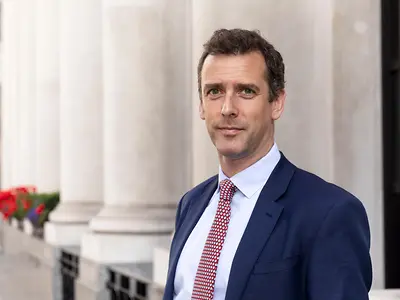
These quiet decisions rarely make headlines—but they define what good fund research looks like. And it’s just one part of what Tom Jemmett, head of fund research at LGT Wealth Management, oversees every day.
At LGT Wealth Management, a significant portion of our capital is invested in third-party active managers and investment trusts, making fund analysis a crucial part of our business. Given there are over 7,000 active funds globally and around 300 investment trusts under management, narrowing the field to a high-conviction, quality-focused list is both an art and a science, and central to our philosophy.
Tom’s role is multifaceted. In a single day, he might attend a strategic meeting with a Swiss family office to exchange views on global markets, meet with a visiting US fund manager to learn about their strategy, speak to the board of an investment trust about capital allocation, and chair LGT’s internal Authorised Collectives Committee (ACC), which is responsible for approving funds.

The process begins with idea generation. New fund ideas come from many sources—internal discussions, the investment committee, peer institutions, industry conferences, and conversations with family offices. Often, it’s about identifying gaps in our current approved list or exploring new themes such as energy transition, technology innovation or sustainable fixed income.
Once an idea surfaces, the due diligence begins. Every fund undergoes a rigorous evaluation process, both quantitative and qualitative. This includes analysis of past performance, risk metrics, portfolio construction, and market exposure. But numbers only tell part of the story. Equally important is understanding the fund manager’s philosophy, mindset and alignment with clients—do they invest their own capital alongside ours? Are incentives structured for long-term success?
At the core of our fund selection and oversight is a formal governance body called the Authorised Collectives Committee (ACC) for open-ended and ETF funds. Chaired by Tom, this formal governance body brings together senior investment professionals to debate, challenge and ultimately vote on whether a fund deserves a place on our approved list.
Funds are only added following a majority vote, often after months of research. Our goal is not to build a long list of options, but a focused, conviction-led shortlist of managers we believe have a reasonable chance of outperforming over the investment cycle.
The research does not stop once a fund is approved. Ongoing oversight is critical to ensuring funds continue to meet expectations. This includes monitoring performance, manager turnover or any deviation from the stated investment process—what we call style drift. If something changes, the committee reassesses.
Continual oversight, not blind loyalty, allows us to act swiftly and decisively when red flags emerge.
Investment trusts—publicly-listed companies that invest in a portfolio of assets such as shares, bonds or property—offer a unique set of opportunities and complexities. When you invest in an investment trust, you’re buying shares in a company which is listed on the stock exchange just like any other company. The trust is managed by professional investors and governed by an independent board of directors responsible for overseeing the manager and protecting shareholders’ interests.
Unlike open-ended funds, which have to deal with redemptions and subscriptions through either selling or buying underlying investments, the investment trust structure provides a permanent capital pool. This gives the manager more freedom to take long-term views and invest in less liquid assets without concern over redemptions. We think this is an appealing feature of the structure which offers investors attractive opportunities to grow capital long-term.
In addition to investment trust selection and performing ongoing oversight, Tom and his team engage with investment trust boards to ensure structures serve investors’ best interests.
Regular dialogue with the boards is essential, not just on performance matters but on governance and shareholder alignment. The capital allocation debate has been front of mind over the last couple of years and most engagements with boards have started with a conversation on this topic.
With investment trusts, it is not just about what the manager does but how the board manages the structure. This includes facing activist pressure, enforcing capital discipline, and ensuring proper oversight. Like open-ended funds, we seek manager alignment as well as board alignment within investment trusts. Skin in the game—the idea that decision makers should have personal financial exposure in the structure—is just as important for boards as it is managers. Additionally, we ensure the board remains effective in their independent oversight, particularly during periods of stress, while also monitoring how trusts manage discounts, capital and shareholder interests.
At LGT Wealth Management, we don’t just focus on what goes into portfolios—we spend just as much time thinking about what stays out. Whether it’s avoiding high-profile collapses or uncovering an overlooked gem through different analysis, our fund research team plays a vital role in safeguarding client capital.
Through rigorous research, clear governance and deep industry insight, Tom and his team help ensure our clients are invested not just in funds that look good today, but in those that can stand the test of time. It is a privilege to manage our clients’ wealth, and the due diligence and ongoing oversight led by our fund research ensure our clients benefit from a carefully curated selection of active funds and investment trusts. Ultimately, this disciplined, strategic approach, combined with strong governance and interest alignment, helps us navigate a complex investment landscape, ultimately delivering sustainable, long-term value.
This communication is provided for information purposes only. The information presented herein provides a general update on market conditions and is not intended and should not be construed as an offer, invitation, solicitation or recommendation to buy or sell any specific investment or participate in any investment (or other) strategy. The subject of the communication is not a regulated investment. Past performance is not an indication of future performance and the value of investments and the income derived from them may fluctuate and you may not receive back the amount you originally invest. Although this document has been prepared on the basis of information we believe to be reliable, LGT Wealth Management UK LLP gives no representation or warranty in relation to the accuracy or completeness of the information presented herein. The information presented herein does not provide sufficient information on which to make an informed investment decision. No liability is accepted whatsoever by LGT Wealth Management UK LLP, employees and associated companies for any direct or consequential loss arising from this document.
LGT Wealth Management UK LLP is authorised and regulated by the Financial Conduct Authority in the United Kingdom.