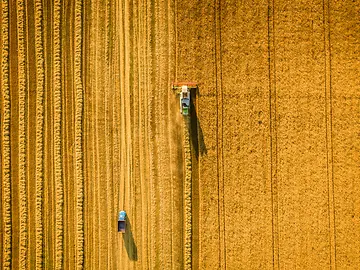

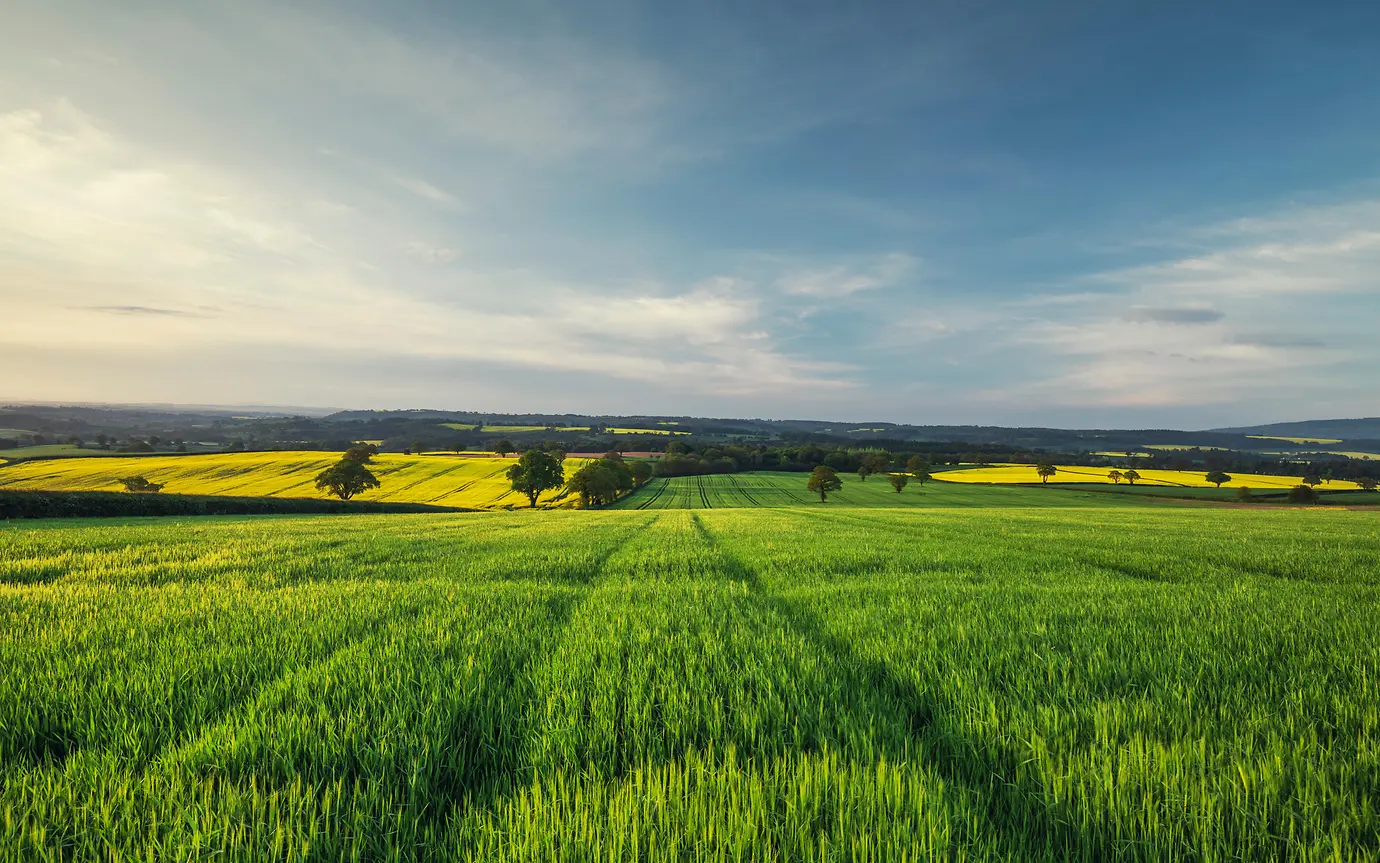
Farming has always demanded resilience, but in recent years that resilience has been pushed to new limits. Shifting weather patterns, rising costs and volatile markets, coupled with uncertain policy landscapes and changing regulations (such as trade agreements post-Brexit and Inheritance Tax changes) have left many British farms questioning whether conventional approaches can continue to deliver long-term security. In response, a growing number are beginning to explore regenerative practices, not as a fashionable fix or guaranteed solution, but as a considered attempt to work more in step with natural systems. While regeneration is no cure-all, it is prompting an important reassessment of what productive, profitable and sustainable farming could look like in the decades ahead. Encouragingly, as certain farms turn to regenerative farming techniques, signs of renewal are emerging.
Fundamental to the farming process is the soil itself. Soil is considered by some as the original asset class: a form of self-regenerating capital on which diverse forms of wealth depend. For farmers, it influences both their balance sheet and their livelihoods; its structure, carbon and microbial life determine whether they thrive or struggle.
Across the food chain, from farmers, to millers, to supermarkets, there’s growing recognition that soil health is fundamental not just to wellbeing, but to economic stability. Resilient supply chains, stable prices and nutritious produce all depend on functioning ecosystems beneath the surface.
Capital markets, too, are beginning to tune in. The associated benefits of thoughtful farming such as cleaner water, carbon storage, flood mitigation and biodiversity gains are now increasingly measurable through technology and data. These outcomes are not merely environmental “extras”, they underpin long-term value.
Stronger soils mean reduced operational risk, greater yield stability and lower insurance exposure, supporting more reliable long term value creation - and helping businesses future proof. Better data means capital flows to stronger, more resilient opportunities and helps local businesses plan ahead, and facilitates more collaboration.
The challenge is to ensure that each actor in the chain from farmer, to processor, and onwards to consumer, benefits from that value. Food must remain affordable, farmers need viable margins and nature’s carrying capacity must recover. That balance is difficult to achieve, which is why examples of commercial success are so important.
To see what this looks like in practice, members of our Investment, Sustainability and Stewardship teams visited S.S. Horton & Sons, a seventh-generation family business managing 9,500 acres of mixed farmland in Oxfordshire. They’ve created a fully regenerative system that integrates data, technology and ecological design.
| 1. Seeks to reduce soil disturbance Minimise tillage and mechanical disruption to preserve soil structure and health | 4. Crop diversity Implement diverse crop rotations to improve soil health, reduce pest pressure and increase access to a variety of markets |
| 2. Integrate animals Incorporate livestock grazing to enhance nutrient cycling and soil fertility, and reduce synthetic inputs | 5. Protect soil surface Maintain ground cover to prevent erosion and improve water retention |
| 3. Maintain living roots Keep living roots in the soil year-round to support microbial communities | 6. Sustainable traceable food system Develop transparent supply chains that support regenerative agriculture practices |
The farm also carefully considers the “inputs from” and their “impacts on” the local landscape. For example, their pigs are fed on surplus from a nearby yoghurt factory which brings a dual benefit: it feeds the pigs and prevents yoghurt waste from entering rivers – where it can be more damaging than sewage – or from requiring costly specialist disposal. They work with insurers and water companies to mitigate flood risk and improve local water quality. Every decision, from crop rotation to composting, is informed by twelve years of data.
The results are striking. By working with nature rather than against it, the farm has reduced inputs like fertiliser and herbicide by 30–40%, improving margins and resilience. Their regeneratively managed soils retain more water, cushioning yields through droughts. In the dry 2025 season, one of the toughest in a decade, yields held steady while margins rose 4–20 times above conventional peers across their three main crops.
Just down the road is Matthew’s Cotswold Flour, another long-standing family business demonstrating the power of partnership and multi-generational thinking. Working with regenerative farms like SS Horton & Sons, Matthew’s encourages regenerative farming through multi-year supply agreements, which come with requirements for data on traceability, soil health and carbon impact. Further up the food ecosystem, Matthew’s stocks all the major retailers: Tesco, Sainsbury’s, Waitrose and M&S, who use this data to plan and report on the sustainability of their businesses.
In return, the mill benefits from consistent quality, price stability and secure long-term supply. Farmers can plan crop rotations years ahead, the mill can expand confidently, and the system can scale across the local landscape and beyond. It’s a two-way value chain built on resilience and regeneration rather than extraction. And it’s working for this local network.
This model marks a quiet revolution. These aren’t boutique farms serving a niche market. They are large-scale, profitable businesses producing nutritious food at prices ordinary consumers can afford.
Major supermarkets and food manufacturers are increasingly setting specific targets for adopting regenerative agriculture practices within their supply chains. When regenerative principles meet commercial discipline, the system begins to balance itself. Each stakeholder in the chain: farmer, miller, retailer and consumer, derives value through a system that regenerates nature, rather than depleting it. The associated benefits are just that: valuable social and natural bonuses, built into an already sound economic case.
Of course, not every farm has the same resources, soil type or starting point. For some, the transition will be more challenging. But examples like SS Horton & Sons and Matthew’s prove that regeneration is not a luxury that few can achieve; instead, it can offer a viable business model when aligned with the right partners who share values and long-term goals.
In natural-capital terms, farming is the missing giant. The UK Biodiversity Net Gain market is emerging. Currently £100m per year is invested in UK Commercial Forestry. Yet UK farming, which in aggregate is worth £400 billion, remains largely unpriced as a regenerative, natural capital opportunity.1
This is where investors could play a catalytic role: supporting transitions, rewarding measurable improvements in soil and carbon and backing companies and supply chains that share risk and reward. Capital that behaves more like soil – layered, patient and regenerative – can help this movement take root.
[1] Savills UK | Spotlight: The Forestry Market – March 2025
This communication is provided for information purposes only. The information presented herein provides a general update on market conditions and is not intended and should not be construed as an offer, invitation, solicitation or recommendation to buy or sell any specific investment or participate in any investment (or other) strategy. The subject of the communication is not a regulated investment. Past performance is not an indication of future performance and the value of investments and the income derived from them may fluctuate and you may not receive back the amount you originally invest. Although this document has been prepared on the basis of information we believe to be reliable, LGT Wealth Management UK LLP gives no representation or warranty in relation to the accuracy or completeness of the information presented herein. The information presented herein does not provide sufficient information on which to make an informed investment decision. No liability is accepted whatsoever by LGT Wealth Management UK LLP, employees and associated companies for any direct or consequential loss arising from this document.
LGT Wealth Management UK LLP is authorised and regulated by the Financial Conduct Authority in the United Kingdom.