After several years battling headwinds in the form of low growth and inflation, amplified this year by US trade tariffs and a strengthening euro, the Eurozone enters 2026 with more stable economic prospects, thanks to a resilient labour market, lower interest rates and increased fiscal spending.
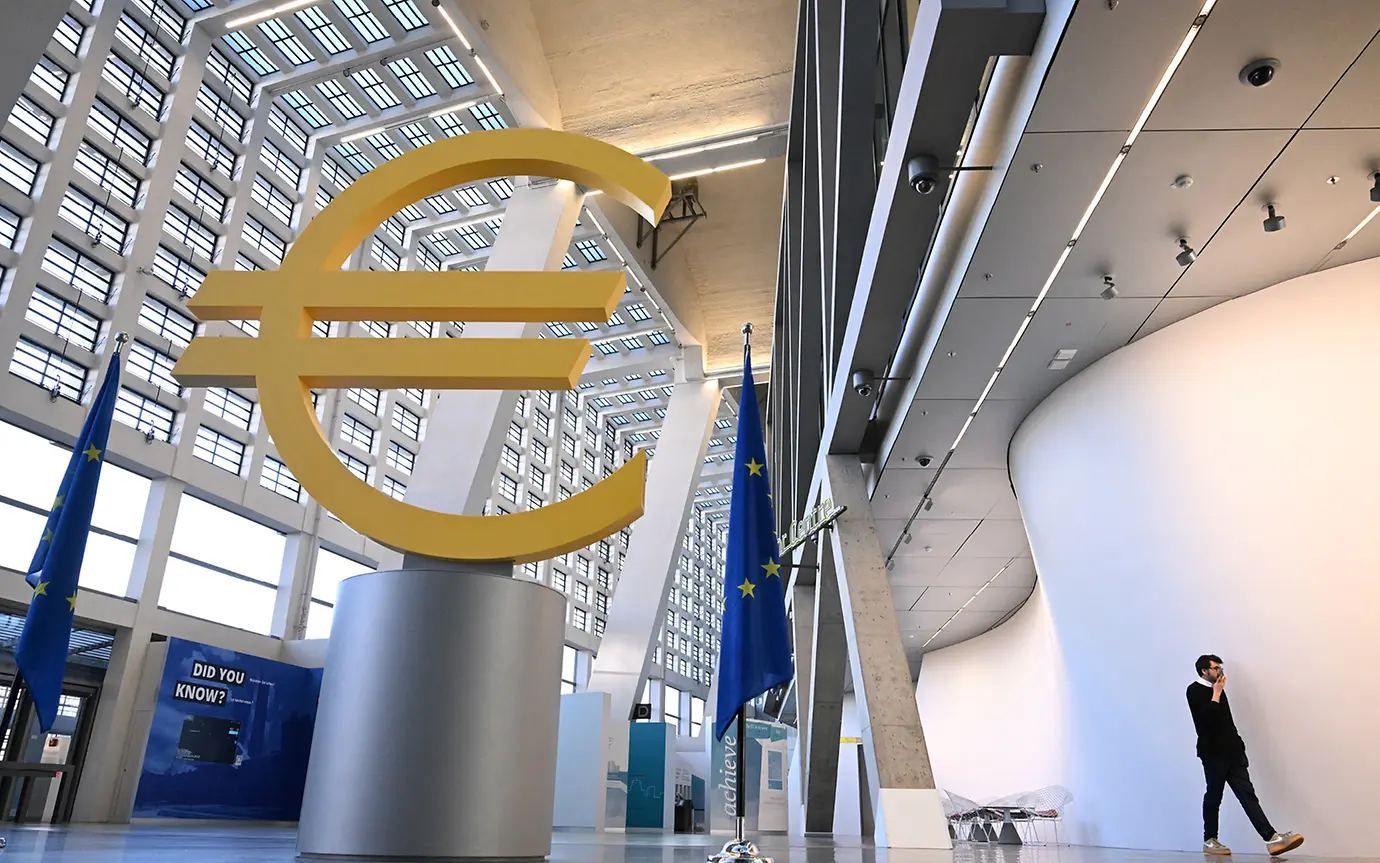
Europe enters 2026 positively, having weathered recent economic storms successfully. We anticipate a year of steady, trend-like growth, with GDP increasing by 1.3 %. This moderate performance is underpinned by lowered cost of capital as well as a resilient labour market that offers a near-record low unemployment rate and positive real wage growth.
This stability augurs well for increased private consumption as consumer confidence grows. Other contributing factors will be the easing of US trade policy uncertainty and the bottom of the recent manufacturing slump.
The most eagerly awaited development is Germany's plan to raise spending on infrastructure, climate and defence by nearly 1 % of the country's GDP, lifting the Euro area's growth. Outside of Germany, rising defence spending will largely offset any headwinds from fiscal consolidation efforts.
Mid-term however, more effort will be needed to boost trend GDP growth and invigorate private investment in European economies. According to the UN, the European Union's working age population is projected to decline by an average 0.6 % each year over the next two decades. This will further constrain the region's growth potential and gradually reshape consumption and investment patterns.
Eurozone equities trade at an attractive valuation discount to their global peers, offering investment opportunities. However, for this gap to narrow, companies must deliver a convincing return to earnings growth.
Would you like to learn more about what investors should expect from 2026?
While we do expect that increased fiscal spending will particularly benefit the industrials and materials sectors, we believe that much of this growth is already priced in and the full impact on revenues in Euro area companies may not materialise until the second half of the year. We therefore advocate for a selective approach to stock selection, focusing on companies with resilient demand and visible growth.
The European Central Bank (ECB) has been successful in anchoring inflation close to its 2 % target. As a result, we expect the short end of the yield curve to remain stable. The long end, however, is suffering from the upward pressure from increasing government borrowing need. Risks arising from Dutch pension reform and French political uncertainty are adding volatility. We maintain a preference for high-quality issuers and see limited appeal in stretching for yield in weaker credits.
The euro is well-positioned to gain momentum in 2026. The ECB's stable policy contrasts with the more fluid outlook for the US Federal Reserve, which should continue to narrow interest-rate differentials in the euro's favour. That said, the difference in fiscal approach among European countries limits the perception of the euro as a unified safe asset and makes the euro's journey to becoming a global reserve currency a gradual evolution rather than a step change.
While risks remain - including potential delays in fiscal spending and any revival of trade tensions - the 2026 base case for the eurozone is for a stable, domestically powered expansion.
An accommodative monetary policy, resilient domestic spending and improved prospects for exports have helped to establish the Swiss economy on firm ground as 2026 approaches. Growth is set to stabilise at 1.6 % next year as global headwinds fade and the economy adapts to new trade environment.
The November agreement with the US that slashed trade tariffs from a whopping 39 % to a more rational 15 % constituted a pivotal de-escalation, delivering major relief to exporters. Add in the normalisation of eurozone activity and expansionary Swiss monetary policy and we predict an uptick in investment appetite and more support for labour markets. Private consumption is likely to remain modest but resilient and - despite a rise in unemployment in 2025 - helped by positive real wage growth.
Inflation will remain at the lower end of the Swiss National Bank's (SNB) target band, hovering just above zero through the first half of 2026. Structural economic anchors such as the current-account surplus and conservative fiscal framework continue to support the Swiss franc. As a result, Swiss yields remain below those in the eurozone and the US across the yield curve.
Swiss equity markets are emerging from a challenging period marked by CHF strength and subdued growth across Europe and China. As an export-oriented economy, the Swiss stock market is likely to benefit from improved visibility with regard to US tariffs. Recovery in other European markets in 2026 would provide an additional tailwind.
This communication is provided for information purposes only. The information presented herein provides a general update on market conditions and is not intended and should not be construed as an offer, invitation, solicitation or recommendation to buy or sell any specific investment or participate in any investment (or other) strategy. The subject of the communication is not a regulated investment. Past performance is not an indication of future performance and the value of investments and the income derived from them may fluctuate and you may not receive back the amount you originally invest. Although this document has been prepared on the basis of information we believe to be reliable, LGT Wealth Management UK LLP gives no representation or warranty in relation to the accuracy or completeness of the information presented herein. The information presented herein does not provide sufficient information on which to make an informed investment decision. No liability is accepted whatsoever by LGT Wealth Management UK LLP, employees and associated companies for any direct or consequential loss arising from this document.
LGT Wealth Management UK LLP is authorised and regulated by the Financial Conduct Authority in the United Kingdom.