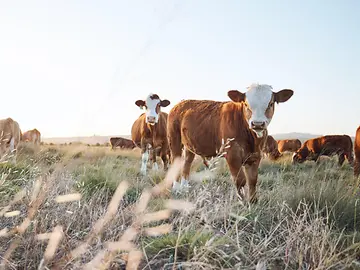

Nature has always underpinned global economies, pollinating crops, keeping water flowing, protecting fragile coastlines against extreme weather and providing the land required to feed billions of people. Yet this dependence has not always been reflected in how investors assess businesses. As nature and biodiversity loss accelerates alongside climate change, investors increasingly recognise that the degradation of ecosystems is not just an immediate environmental issue but a long-term economic and financial risk.
Declining agricultural yields, water scarcity, disrupted supply chains and diminished natural protection against extreme weather can all filter through into company earnings, sector performance and, ultimately, portfolio returns. It raises a big question now percolating around financial centres: How can investors assess and address nature-related risks and opportunities, such as ecosystem resilience and nature loss, within the investment process? The question is especially timely. On 19 October, governments will gather in Yerevan, Armenia, for COP17, a United Nations conference focused on global efforts to protect and restore nature.
In a market still taking shape, at LGT we see investing in nature as not only about biodiversity-specific funds, but also about integrating nature-related risks and opportunities into engagement and stewardship across existing portfolios. Putting this into practice is not straightforward, as the issues vary by sector and location, as does the availability of data needed to assess them.
There is no single approach to integrating nature and biodiversity considerations across the investment process, and investors are still developing the tools and experience to do so effectively. What matters now is to start integrating nature considerations into decision-making, learning from the data available and building on that progress over time.
While carbon emissions can be measured, aggregated and compared in terms of tonnes of CO2, nature has no equivalent single measure. For food and agricultural companies, for example, water availability and soil health may be particularly relevant, while manufacturers or infrastructure operators face different pressures, often shaped by where they operate. The absence of any universal nature metric means engagement has to be tailored to the underlying investee company.
Despite that complexity, there are promising signs of progress. The market has moved on the issue more quickly than it did on climate, although the methods for assessing and acting on findings are still developing. The field is still at an early stage, however better data and more consistent frameworks are giving investors a stronger basis for action, and there is increasing attention from both financial and regulatory institutions.
“Nature is shifting from an emerging sustainability topic to a core consideration in understanding long-term resilience in the financial world.”
Much of that momentum can be traced to the emergence of formal disclosure frameworks, chief among them the Taskforce on Nature-related Financial Disclosures (TNFD). Founded in 2021 by financial institutions, corporates and market services providers, it operates alongside the Task Force on Climate-related Financial Disclosures (TCFD), which dates to 2015. It gives companies a common structure for reporting on their nature-related risks and dependencies, with more than 1,000 organisations now publishing at least some TNFD-aligned disclosures, offering investors a basis for comparison.
NatureAlpha is another tool that helps investors to understand the risks and impacts of their investments on nature. The organisation, which was also founded in 2021 and aligns with the TNFD, uses datasets, AI-assisted analysis and geospatial information to help investors assess potential nature-related risks, dependencies and impacts, and provides a way to navigate the associated complexity as the broader data landscape matures.
While carbon emissions can be compared using a common metric, nature-related risks depend heavily on location and are therefore harder to compare. A water-stressed facility in one river basin, for example, might face a completely different risk profile to an identical facility a hundred kilometres away in a basin with better supply.
For an investor engaging with a company, these differences call for a closer look at the conditions around its sites, from local ecosystems and government policy to the needs of nearby communities. Dialogue with the company can help clarify how it understands and manages those risks. What works in one location may not work in another, making a one-size-fits-all approach across a diversified portfolio difficult.
The need for local insight makes improvements in disclosure and in geospatial data tools particularly valuable. Nature disclosures, including TNFD, and advances in these tools can help investors analyse site-specific risks, even where company reporting is patchy. These developments were a factor behind LGT’s decision to partner with NatureAlpha, rather than relying solely on what companies choose, or are able, to disclose themselves.
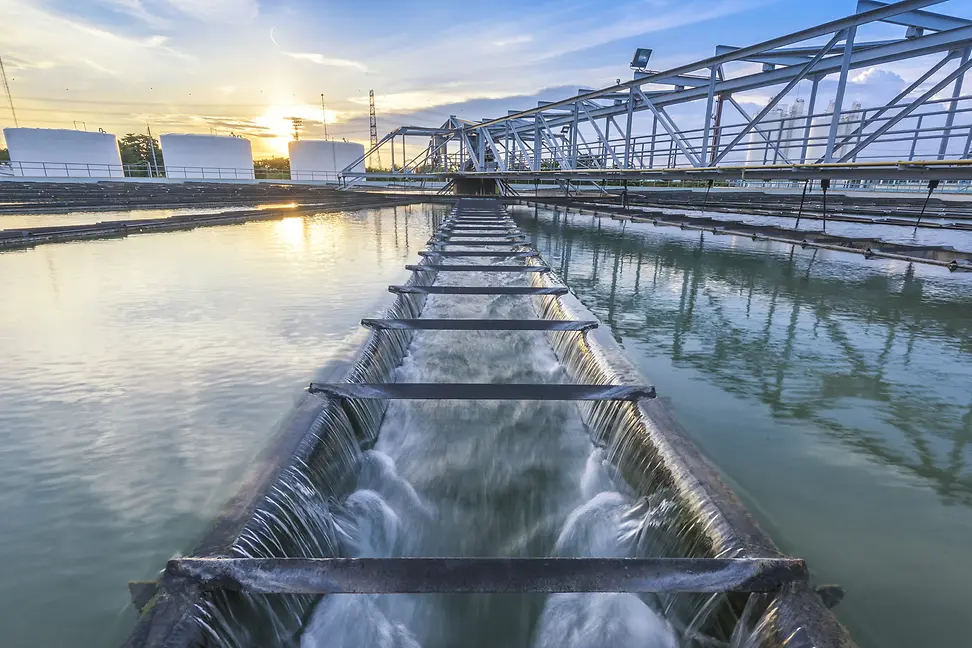
Nature-related risks and opportunities are becoming very tangible, very quickly, with water being one of the clearest current examples. The data centre boom is a stark example as AI-driven demand for computing capacity surges, so does the water and energy required to cool and power that infrastructure. Increasingly, companies are having to prioritise new sites with sufficient water availability. The same physical limits are showing up elsewhere, in agriculture, manufacturing and even within parts of the energy transition, where land and water constraints are beginning to influence how and where projects are developed.
However, for companies able to get ahead of them, these constraints can present opportunities as well as risks. Through effective water resource management, energy efficiency or better site selection, companies may be more resilient and, in some cases, better positioned competitively as these constraints tighten for everyone else.
Our 2025 Stewardship Report details our engagement with the Swiss pharmaceuticals company Roche, whose global manufacturing footprint depends on resource-intensive processes that can strain local water systems. Using NatureAlpha's geospatial data, LGT mapped Roche's facilities against key water basins and identified several sites located in areas of elevated water pollution and ecosystem sensitivity.
Combined with Roche's own internal water impact assessments, this analysis helped LGT prioritise Roche for engagement and provided a starting point for constructive dialogue on water and biodiversity risks. Through the engagement, Roche has shared more detail on its water impact assessments and signalled plans to extend them to more facilities, alongside its continued investment in wastewater treatment. Looking ahead, we will continue working with Roche on measurable biodiversity targets and clearer disclosure of mitigation plans at high-risk sites.
LGT's investment stewardship approach prioritises nature and biodiversity as one of its four stewardship pillars, reflecting their importance to ecosystem integrity, climate resilience and long-term economic stability. In addition to being a signatory to the "Finance for Biodiversity Pledge" since 2022, LGT joined "Nature Action 100", a global investor-led initiative pushing for greater corporate ambition on nature and biodiversity loss, the following year.
For LGT, the ongoing exchange between data, specialist insight and company dialogue is helping turn biodiversity from an emerging risk area into a more practical focus for long-term stewardship. To explore how biodiversity and other themes shape our stewardship strategy and company engagement, download our 2025 Stewardship Report.
This remains a fast-moving field, and maintaining close contact with that expertise is central to keeping our own approach well-informed.

This communication is provided for information purposes only. The information presented herein provides a general update on market conditions and is not intended and should not be construed as an offer, invitation, solicitation or recommendation to buy or sell any specific investment or participate in any investment (or other) strategy. The subject of the communication is not a regulated investment. Past performance is not an indication of future performance and the value of investments and the income derived from them may fluctuate and you may not receive back the amount you originally invest. Although this document has been prepared on the basis of information we believe to be reliable, LGT Wealth Management UK LLP gives no representation or warranty in relation to the accuracy or completeness of the information presented herein. The information presented herein does not provide sufficient information on which to make an informed investment decision. No liability is accepted whatsoever by LGT Wealth Management UK LLP, employees and associated companies for any direct or consequential loss arising from this document.
LGT Wealth Management UK LLP is authorised and regulated by the Financial Conduct Authority in the United Kingdom.