

Proper governance and oversight of investments is crucial for any charity striving to protect its assets, meet its objectives, and fulfil its charitable mission responsibly. Effective oversight not only reduces risk but also demonstrates accountability to donors, regulators, and beneficiaries.
Using nine ‘best practices’ here’s how charity trustees can monitor and review their charity’s investments for effective governance and oversight.
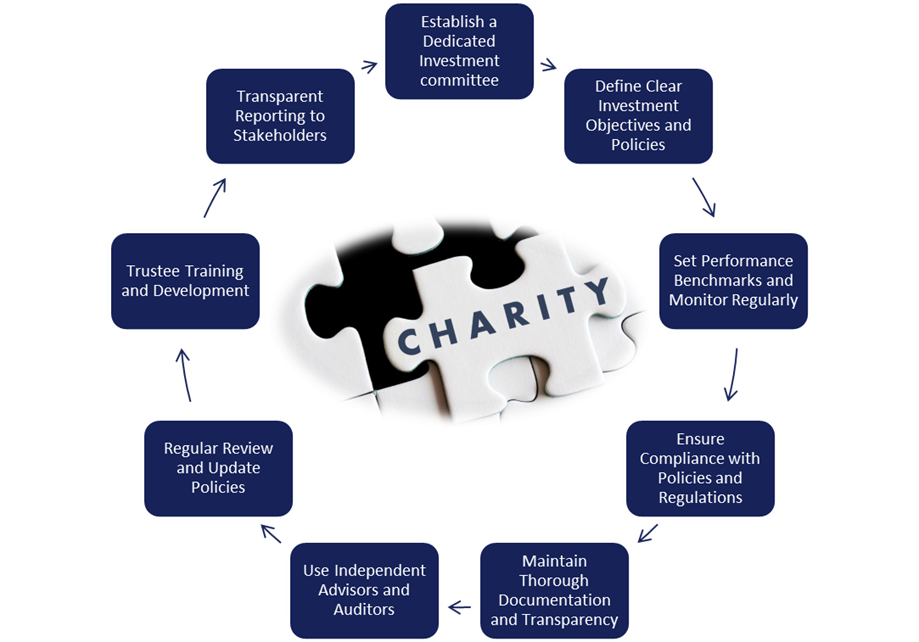
For many charities, investment decisions are complex and require specialised knowledge. Consider forming a Dedicated Investment Committee composed of trustees and, where appropriate, external advisors. This committee should assume responsibility for developing, implementing, and monitoring the charity’s investment strategy and ensuring all decisions are made in the charity’s best interests. Clearly defined roles and responsibilities within the committee foster accountability and transparency.
The foundation of robust investment governance is the investment policy statement (IPS). This document should outline the charity’s investment objectives, risk tolerance, liquidity needs, ethical considerations, and restrictions. Align the IPS with the charity’s mission, timelines, and any statutory or legal requirements applicable to its investments. Review and update this policy regularly, especially after significant organisational or market changes.
Monitoring investments is not just about tracking numbers; it is about understanding whether your portfolio is on track to meet your long-term objectives. Set clear benchmarks for performance, these may be based on broad indices, peer groups, or specific return targets. Performance should be reviewed regularly, more frequently if markets are volatile or if your fund composition changes.
Good governance requires ongoing oversight to ensure compliance with both internal policies and external regulations. Trustees must ensure investments remain within the parameters of the IPS and comply with charity law, tax regulations, and any restrictions outlined in your governing documents. Regular compliance checks should be built into the investment review process. This mitigates the risk of unintended breaches that could jeopardize the charity’s status or reputation.
Transparency is vital to inspire confidence among stakeholders and uphold your charity’s integrity. Trustees should keep detailed records of all investment decisions, reviews, and actions taken. Minutes of Investment Committee meetings should reflect the rationale for decisions, consideration of risks, and discussions around performance. This creates a clear audit trail for regulators and donors and fosters a culture of accountability.
External advisors and auditors can add valuable independence to your governance processes. Consider periodic external reviews of your investment strategy, performance, and compliance. Independent advisors can challenge assumptions, provide market insights, and validate internal processes. Auditors can confirm that controls are robust and effective. Together, they enhance confidence in your charity’s investment oversight.
A robust governance framework is dynamic, not static. The charity’s investment policy, risk appetite, and strategic asset / fund allocation should be reviewed at least annually, or whenever there are significant changes to the market environment or to the charity itself (for example, changes in cash flow requirements, new income streams, or alterations in your charitable objectives). This ensures your investment strategy remains fit for purpose now and into the future.
Trustees have a legal duty to act with skill and care in managing the charity’s resources. That means ongoing skills development is essential, especially as financial regulation and investment products evolve. Your manager may provide this directly or you can access training on investment governance, ethics, and fiduciary responsibilities online. Up to date knowledge strengthens the board’s capability, enhances decision-making, and reduces the risk of costly mistakes.
Clear and honest reporting fosters trust and demonstrates the charity’s commitment to good governance. Regular performance reports should be shared not just within the board but also with donors, supporters, and beneficiaries where appropriate. Reports should provide insight into how investments support the charity’s mission and the steps taken to manage risk and comply with policies.
Effective governance and oversight are not just regulatory obligations; they are vital to achieving your charity’s purpose, retaining donor confidence, and preserving your reputation. A systematic approach grounded in clear policies, regular monitoring, robust documentation, and continuous learning, will position your charity to achieve its financial and charitable goals year after year.
This communication is provided for information purposes only. The information presented herein provides a general update on market conditions and is not intended and should not be construed as an offer, invitation, solicitation or recommendation to buy or sell any specific investment or participate in any investment (or other) strategy. The subject of the communication is not a regulated investment. Past performance is not an indication of future performance and the value of investments and the income derived from them may fluctuate and you may not receive back the amount you originally invest. Although this document has been prepared on the basis of information we believe to be reliable, LGT Wealth Management UK LLP gives no representation or warranty in relation to the accuracy or completeness of the information presented herein. The information presented herein does not provide sufficient information on which to make an informed investment decision. No liability is accepted whatsoever by LGT Wealth Management UK LLP, employees and associated companies for any direct or consequential loss arising from this document.
LGT Wealth Management UK LLP is authorised and regulated by the Financial Conduct Authority in the United Kingdom.