
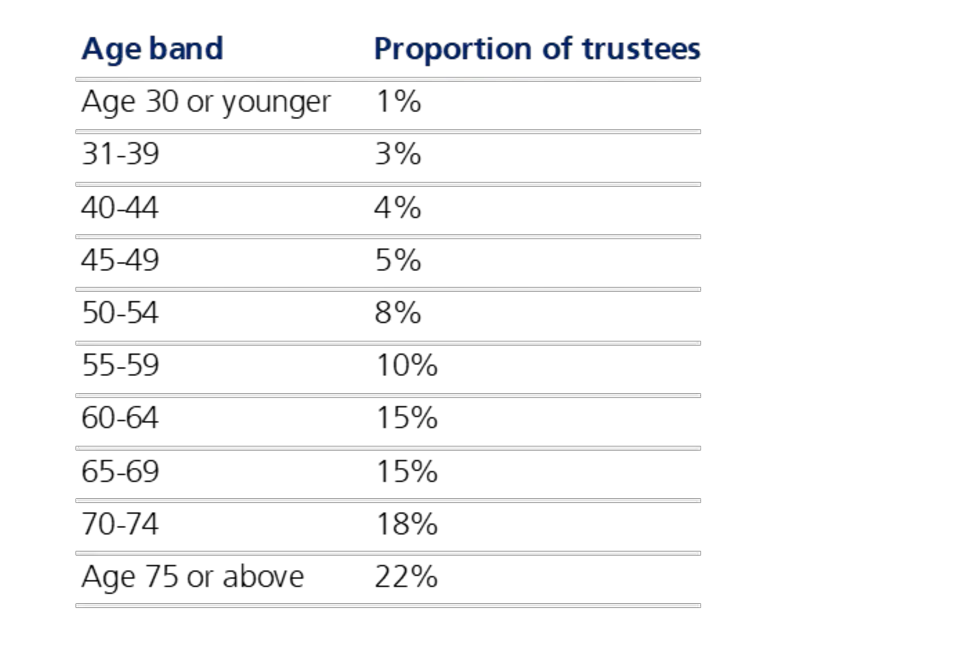
UK Charities are approaching a significant turning point. With long‑standing trustees nearing retirement and regulatory expectations rising, succession planning is no longer optional - it is fundamental to organisational resilience. Yet the sector faces a stark imbalance. Only 1% of registered trustees are under 30 and just 4% are under 40. Meanwhile, 88% are over 50. Without deliberate action, charities risk a widening succession gap that could undermine continuity and innovation. The sector must look to younger generations not only as future leaders, but as active contributors who bring new skills, lived experiences, and perspectives that reflect today’s society.
In a world where universities and schools provide extracurricular societies and collaborative thinking in ways that often mirror charity trusteeship, many students leave education and step into employment without realising they can continue applying these skills throughout their lives. Often these skills are set aside to focus solely on their new profession. It is important, for charities to be transparent and encouraging of youthful individuals to join their ranks, whether in a shadowing capacity or via a subcommittee. This provides critical insight into charity operations and serves to expose them to the reality of these positions, so when the time comes for natural succession, there is an obvious resolution, and one which has been considered and has prepared for. This preparation is not time-consuming and often an hour a month at most, can ensure that the jargon and particular processes associated with a charity board and overall decision making are not alien concepts. Each year c.1000 trustees under 30 step down from trustee roles, as they leave their student unions and schooling bodies. These SU boards instil and develop ‘incredible, exciting, diverse conversation amongst impressive young people.
As described above, in the UK, only 1% of registered trustees are under the age of 30, and only 4% under 40. This is a large demographic gap when considering the knowledge potential that young professionals can bring to the table. The disparity gets larger when you look at the April 2025 government statistics conveying the breakdown of demographics and experience in UK charities, with 88% of people in associated trustee roles being over the age of 50.
Encouraging young people to consider trusteeship begins with early engagement. Many prospective trustees assume governance is overly technical, or that significant financial expertise is required from day one. Charities can lower this barrier by offering structured opportunities for younger adults to learn how boards operate. By observing meetings, joining sub‑committees, or participating in training that demystifies finance, risk, and strategic oversight. When young people feel informed, included, and equipped to contribute meaningfully, they are far more likely to step forward.
Younger trustees bring distinct advantages to charity boards. They often possess strong digital literacy, a natural fluency in social impact thinking, and an instinctive understanding of what engages modern supporters. These qualities can often complement the experience and institutional knowledge of existing board members. Their presence can also help boards better reflect the communities they serve. However, attracting younger trustees is only half the challenge; the other half is supporting them so they can thrive. Clear induction processes, mentoring from experienced trustees, and open, inclusive board cultures make a significant difference in whether new trustees feel empowered or overwhelmed.
A thoughtful succession plan ensures that change happens gradually and deliberately, allowing knowledge to pass naturally from one generation to the next. This strengthens continuity and protects against gaps in critical skills. Importantly, it also signals to funders, regulators, and beneficiaries that the charity takes governance seriously and is building a resilient foundation for the future. Boards that invest time in developing future leaders by inviting them into conversations early, encouraging questions, and sharing responsibility gradually, tend to navigate leadership transitions with confidence and stability and can therefore have a greater impact.
For those charities looking ahead, the goal is clear, the sector must create environments where younger people can see themselves as trustees, understand the difference they can make, and feel supported as they take on responsibility. By nurturing the next generation today, charities secure not just the longevity of their governance, but the continued impact of their mission for the future. At the heart of charity roles, is the notion of diversity. To foster genuinely balanced discussions, boards need a breadth of perspectives that encourage constructive challenge and fresh thinking. While broader diversity remains an ongoing priority for the sector, the data makes a compelling case that age diversity is an especially powerful place to begin. This is captured clearly in the following reflection from the Blagrave Trust:
the Trustee role writ large suffers from a lack of dynamism, it can often be frustrating and mired in compliance, rather than… ‘exciting, liberating, progressive’. Perhaps by giving the next generation of social entrepreneurs, businessmen and women, researchers and activists the chance to join Boards, solutions can be found and the model can be ‘refreshed’ at a time when it is badly needed.
As of 13 February 2026, there are an estimated 171,149 charities registered in the UK alone. The decision to become a Trustee, is usually found through lived experiences, a passion, or a desire to make an impact in a specific sector such as Health, Sport, Religion to name a few. There will be a charity where an individual’s skills can be utilised and what better way than to be part of an organisation which reflects your enthusiasm and skillset. Charity boards should look out for interested young future trustees, as they may not be aware that their help is always welcome, and consider their organisation’s succession sooner rather than later.
[1] We're losing 5% of UK young Trustees in the next 3 months. Why? | LinkedIn
[2] Why don’t we have more young people on charity trustee boards?
This communication is provided for information purposes only. The information presented herein provides a general update on market conditions and is not intended and should not be construed as an offer, invitation, solicitation or recommendation to buy or sell any specific investment or participate in any investment (or other) strategy. The subject of the communication is not a regulated investment. Past performance is not an indication of future performance and the value of investments and the income derived from them may fluctuate and you may not receive back the amount you originally invest. Although this document has been prepared on the basis of information we believe to be reliable, LGT Wealth Management UK LLP gives no representation or warranty in relation to the accuracy or completeness of the information presented herein. The information presented herein does not provide sufficient information on which to make an informed investment decision. No liability is accepted whatsoever by LGT Wealth Management UK LLP, employees and associated companies for any direct or consequential loss arising from this document.
LGT Wealth Management UK LLP is authorised and regulated by the Financial Conduct Authority in the United Kingdom.