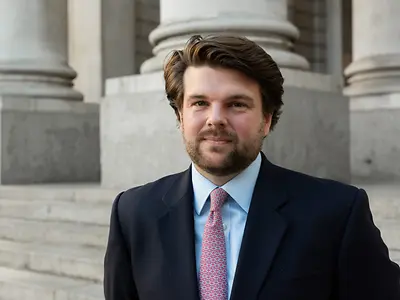


In my former role as an Investment Manager, I often referred to the research team at LGT as the team behind the team. Having now joined the research team as an equity analyst, I want to shed light on the often-underappreciated way our research team collaborates, both internally and across the wider firm.
The ultimate goal of research is to provide suitable recommendations to those managing client portfolios. Although priority is given to investments on our approved investment lists and in our clients’ portfolios, the wider landscape is constantly scoured for potentially compelling investment ideas. Whilst every member of the research team has a specific focus and coverage at any given time, it is worth stressing that new ideas can come from anywhere.
We are all encouraged to share interesting observations among each other to continually help build our collective knowledge base. Just like in any team setting, to be successful, we must strive to be greater than the sum of our parts.
Although a single analyst will lead coverage on an investment, the journey to that ultimate recommendation involves significant debate and discussion among the various teams and investment committees, as well as more informal conversations with research colleagues. It is these moments, referred to as ‘watercooler conversations’, that often lead to meaningful breakthroughs.
Investment research requires an individual to spend a considerable amount of time reading and analysing figures before forming a view about a company or fund. This view will then be tested and challenged in an area of psychological safety – when people feel comfortable speaking up, asking questions, and admitting mistakes without fear of embarrassment or punishment. Amy Edmondson, a professor at Harvard Business School, has devoted much of her academic career to researching and understanding psychological safety in teams, particularly in a workplace setting. To foster a culture of continuous learning and high performance, Edmondson argues that teamwork thrives in organisations where open communication and intelligent risk-taking is not just encouraged, but central to the culture. This is evident across the whole of the research team at LGT.
This collaborative spirit extends beyond individual coverage areas. Over the past year, there are numerous occasions when I have asked questions and sought opinions of others outside of the equity team. Gaining insights from colleagues outside my direct team broadens my perspective about a company or sector. It also helps me avoid becoming too insular or developing tunnel vision.
A good example came earlier this year following the annual results of a large consumer staples company. Our equity, fixed income and stewardship teams all separately cover this company. Before completing my update on their earnings, I spoke with our fixed income analysts to get a full picture of the company’s debt profile and also met separately with LGT’s stewardship analysts to discuss the latest environmental, social and governance (ESG) issues. Being able to approach colleagues and gain their perspectives allowed me to challenge assumptions, consider alternative angles and ultimately strengthen the quality and depth of my research report.
The fund research team, led by Tom Jemmett, host a significant number of meetings with external fund managers on our approved lists. It is not uncommon for other members of the research team, who do not directly look at funds, to attend and, more importantly, actively participate in the meeting. We often have fund managers who hold some of the equities or bonds that we recommend – a perfect opportunity for analysts to openly question and test an investment thesis.
Beyond the formal process, even our physical setup encourages collaboration. The research team is positioned in the middle of our office in the City of London, surrounded by investment teams. Like many firms, we don’t have individual desks – after the pandemic, the firm has operated a hybrid working policy. An unintended benefit of this is that we sit at different desks when in the office. This means it is possible to have different neighbours week to week, which further helps spark conversations that otherwise might not have taken place.
To be sure, it has never been easy being an analyst. On paper, fundamentals – such as strong balance sheets, healthy cash flows, and buoyed growth prospects – are essential elements to successful investing. We rely on these fundamentals in our forecasting, which help form our investment decisions and thesis. But there are times when our forecasting and research can seem less relevant, or in extreme cases, completely irrelevant, particularly when billions of dollars chase just a handful of companies. At times like these, even the most logical research can be overwhelmed by sheer flows into companies.
But it is in these times when a team-based approach to research and investing is paramount. Collaboration ensures different perspectives are brought to the table. Research is a balancing act between analytical work and intuition, because ultimately, no one analyst can grasp all the nuances of market sentiment or predict the next shift in flows. By sharing insights and challenging each other's assumptions, we remain grounded in our research and able to adapt to rapidly changing market conditions.
All in all, it should not be taken for granted that the research team collaborates so effectively, as it is not always the case with other investment firms. At LGT, we do not operate in strict silos, meaning information, ideas and insights are freely shared – essential for producing high-quality research.
Now that I work in research, I appreciate just how much collaboration, discussion and informal exchange goes into every investment idea. It’s not just about who covers what – it’s how we think together as a group. And that collective mindset helps convert good research into great insight, and ultimately, better outcomes for our clients.
This communication is provided for information purposes only. The information presented herein provides a general update on market conditions and is not intended and should not be construed as an offer, invitation, solicitation or recommendation to buy or sell any specific investment or participate in any investment (or other) strategy. The subject of the communication is not a regulated investment. Past performance is not an indication of future performance and the value of investments and the income derived from them may fluctuate and you may not receive back the amount you originally invest. Although this document has been prepared on the basis of information we believe to be reliable, LGT Wealth Management UK LLP gives no representation or warranty in relation to the accuracy or completeness of the information presented herein. The information presented herein does not provide sufficient information on which to make an informed investment decision. No liability is accepted whatsoever by LGT Wealth Management UK LLP, employees and associated companies for any direct or consequential loss arising from this document.
LGT Wealth Management UK LLP is authorised and regulated by the Financial Conduct Authority in the United Kingdom.