Long before the trading floor or the Bloomberg terminal, the City of London did its business over a ‘dish’ of coffee. The coffee houses that sprang up around Cornhill and Lombard Street in the late 17th century gave rise to Lloyd's and the London Stock Exchange, but their history also has a darker side that deserves to be told.
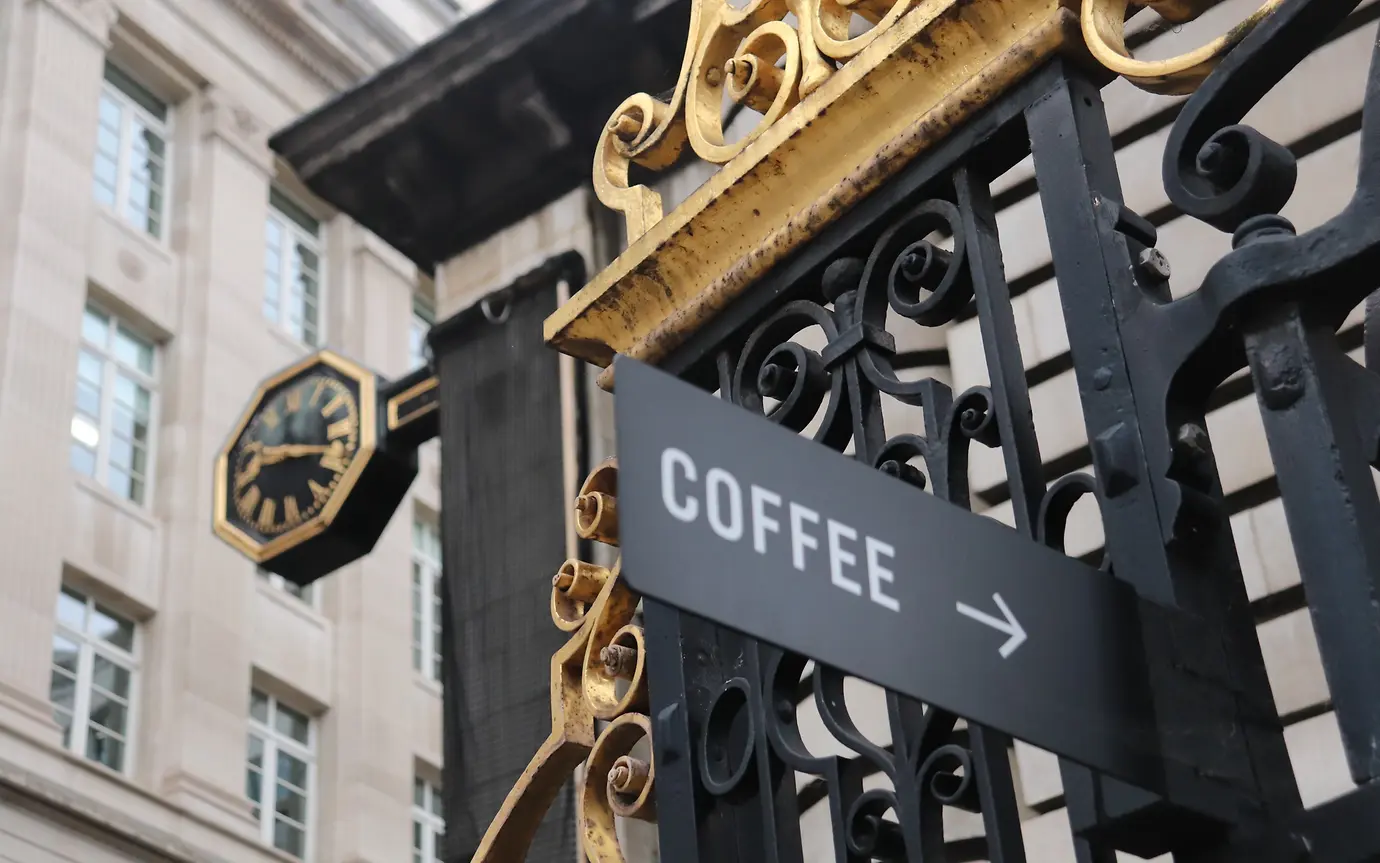
London's first coffee house opened in 1652 in St Michael's Alley, a short walk from our London office.
Coffee houses became the City's first trading floors, giving rise to Lloyd's of London and the London Stock Exchange.
Much of that early wealth, and the coffee trade itself, was built on the transatlantic slave trade. Today, coffee is fuelling a new wave of social enterprise across London.
There are few things many of us enjoy more than a good cup of coffee. For those working in the City of London, it is the fuel that keeps the working day moving, and our research team is no exception. Our morning coffee run has become something of an institution. We debate the merits of the City's coffee shops in much the same way we debate investment ideas: someone will champion a new shop or a hidden gem, and the rest of the team will test the thesis, question the quality and weigh up whether it has done enough to displace the incumbent favourite.
What I had not fully appreciated until recently was just how deeply that habit is woven into the history of the Square Mile, and how close to our own front door the story begins.
In 1652, Pasqua Rosée opened what is widely recognised as London's first coffee house in St Michael's Alley, just off Cornhill. Rosée had come to London as the servant of Daniel Edwards, a merchant trading with the Levant, who had acquired a taste for coffee in Smyrna, a busy Ottoman trading port on what is now Turkey's Aegean coast, known today as Izmir. So many of his friends called round to try this unusual drink that Edwards set Rosée up in business, initially from little more than a shed in the churchyard of St Michael's. A plaque on the Jamaica Wine House pub (also known as the Jam Pot) marks the spot today, a short walk along Cornhill from our office.
Rosée marketed coffee as a sober and healthy alternative to ale and wine, and the idea caught on quickly. Within a few decades London had hundreds of coffee houses, each attracting its own crowd of merchants, shipowners, writers or politicians. They could be found across the capital, from Fleet Street to St James's, but the densest cluster grew up in the narrow lanes around the Royal Exchange, such as Exchange Alley, St Michael's Alley and Threadneedle Street, where merchants could swap news within a few steps of the trading floor.
It is tempting to wonder whether this gave London's merchants an edge. At the time, weak ale was drunk throughout the day, even at breakfast, so swapping a depressant for a stimulant was no small change, and writer Tom Standage dubbed coffee 'the great soberer'. Any productivity boost is impossible to measure, but clearer heads can hardly have hurt those doing business in the City.
For the price of a penny, customers could buy a dish of coffee and, more importantly, gain access to the newspapers, pamphlets and conversation inside, earning coffee houses the nickname 'penny universities'. For the City, their real value lay in information. In an age before the telegraph, let alone the Bloomberg terminal, being in the right room at the right time gave you an edge.
Edward Lloyd understood this better than most. His coffee house on Tower Street became popular with ship captains and merchants, and in 1691 he moved to larger premises on Lombard Street. Lloyd employed runners to bring back news of ships arriving at and leaving the docks, and his regulars began underwriting the risks of those voyages between them. The coffee house went on to lend its name to Lloyd's of London, Lloyd's List and Lloyd's Register. A blue plaque still marks the Lombard Street site.
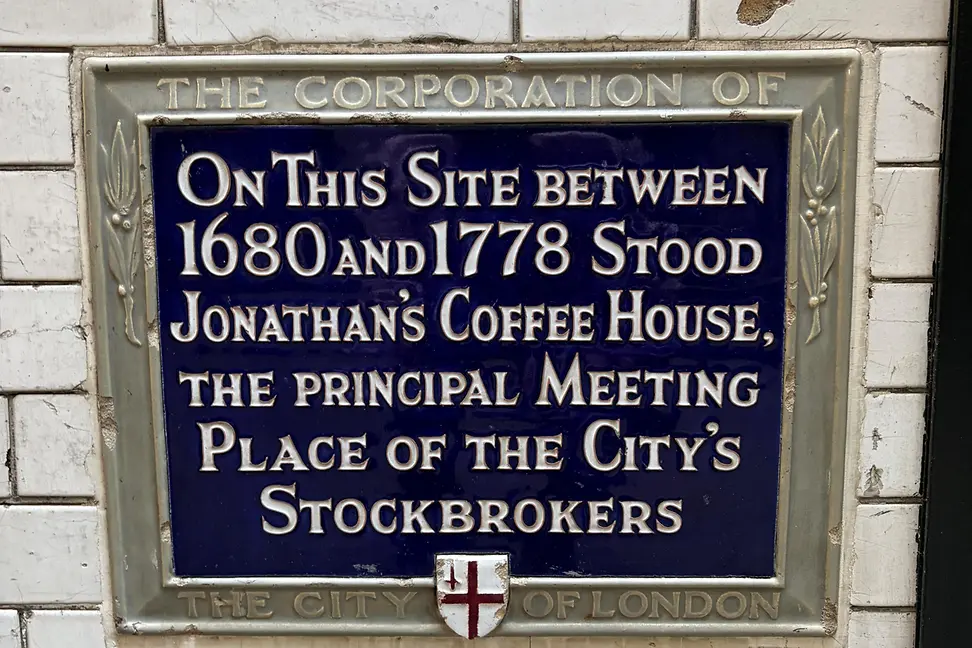
A similar story took place a few yards away in Exchange Alley. In 1698, stockbrokers who had been thrown out of the Royal Exchange for rowdiness took up residence in Jonathan's and Garraway's coffee houses. At Jonathan's, a Huguenot broker named John Castaing began publishing a regular list of stock and commodity prices, The Course of the Exchange. In 1773, brokers who traded there moved into a dedicated building in Sweeting's Alley and named it the Stock Exchange.
As an analyst, I find it striking that the core ingredients of a functioning market (reliable price information, a trusted place to meet and the ability to pool and share risk) all came together over a cup of coffee, within a few hundred yards of where we sit today.
It would be remiss to tell this story without acknowledging that much of the City's early wealth, and the coffee trade itself, was built on the transatlantic slave trade. By the late 1780s, the French colony of Saint-Domingue (modern-day Haiti) supplied around half of the world's coffee, grown on plantations worked by enslaved Africans. Coffee production in British-ruled Jamaica expanded rapidly in the 1790s on the same basis.
The coffee houses were closely tied to this trade. After the Great Fire of 1666, Rosée's original site was rebuilt and became the Jamaica Coffee House, a meeting place for West India merchants, shipowners and insurance brokers. Marine insurance underwritten in the City helped make slaving voyages viable, and historians estimate that a significant share of the City's marine insurance business in the 18th century was tied to the slave economy.
Lloyd's apologised for its role in 2020 and, following independent research into its archives, committed £52 million in 2023 to initiatives supporting affected communities and Black and ethnic minority talent. The Bank of England and the Church of England have also apologised for their historic links. In discussing the inception and growth of the City’s coffee houses, it is important to place them within their historical context and acknowledge the role of the transatlantic slave trade, as well as the profound human cost associated.
Nearly four centuries on from that first shed in a churchyard, coffee continues to bring people together in the City, and increasingly with a social purpose. Redemption Roasters, founded in 2017 by Max Dubiel and Ted Rosner, set up the world's first coffee roastery inside a prison and now runs barista academies in prisons including Wandsworth and Wormwood Scrubs. Graduates can go on to work in its 11 London coffee shops, including one in the City at Broadgate, and make up around a quarter of the shop workforce.
At the other end of the supply chain, Gorilla Conservation Coffee shows what ethical sourcing can achieve at origin. Set up in 2015 by Ugandan wildlife vet Dr Gladys Kalema-Zikusoka, it pays farmers living beside Bwindi Impenetrable National Park a premium above the market price for their coffee and provides training in sustainable farming, which eases pressure on the habitat of endangered mountain gorillas. For those of us who spend our days assessing businesses, these are interesting models: commercial enterprises where the social return is part of the proposition rather than an afterthought.
From a humble shed in a churchyard to institutions that underpin global insurance and capital markets, coffee has played a remarkable role in shaping the City of London. Not all of that history makes for comfortable reading, but it is important that we acknowledge it. The next time I queue for my morning coffee on Cornhill, I will do so with a little more appreciation of the role this humble drink has played in shaping the City.
Coffee houses, Exchange Alley and the 18th century, London on the Ground
A History of the World in Six Glasses, 'The Great Soberer' chapter summary, LitCharts
This communication is provided for information purposes only. The information presented herein provides a general update on market conditions and is not intended and should not be construed as an offer, invitation, solicitation or recommendation to buy or sell any specific investment or participate in any investment (or other) strategy. The subject of the communication is not a regulated investment. Past performance is not an indication of future performance and the value of investments and the income derived from them may fluctuate and you may not receive back the amount you originally invest. Although this document has been prepared on the basis of information we believe to be reliable, LGT Wealth Management UK LLP gives no representation or warranty in relation to the accuracy or completeness of the information presented herein. The information presented herein does not provide sufficient information on which to make an informed investment decision. No liability is accepted whatsoever by LGT Wealth Management UK LLP, employees and associated companies for any direct or consequential loss arising from this document.
LGT Wealth Management UK LLP is authorised and regulated by the Financial Conduct Authority in the United Kingdom.