
Few institutions shape investment returns as much as central banks, yet the language around them can be baffling. Policymakers are 'hawks' or 'doves', and policy is 'tightening' or 'easing'. Deciphering these terms can help investors to understand why central banks take different approaches to the same economic conditions – and what those choices might mean for markets. Earlier this month, the US Federal Reserve (Fed) raised interest rates for the first time in more than three years. A day later, the Bank of England (BoE) left rates on hold, even though both face the same surge in global energy prices.1
In this guide, we explain what these terms mean, what central banks look at and why it matters for investors.
Unlike a high street bank such as NatWest or Barclays, which takes deposits and provides loans, a central bank sits at the top of the financial system. It is the banker to the government and to other banks, it issues the currency and is also responsible for keeping prices stable.
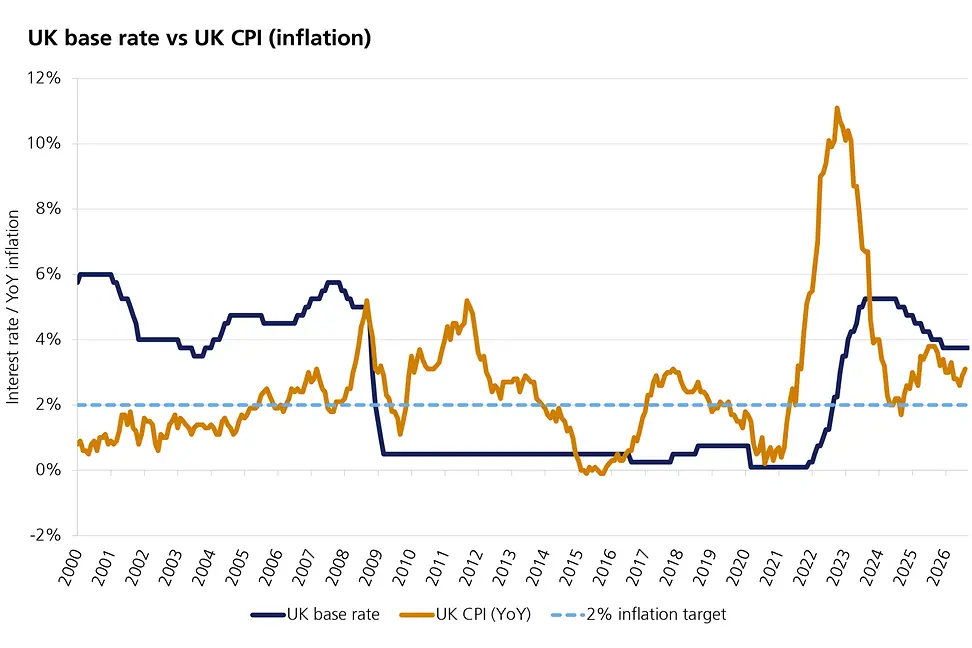
In the UK, that role belongs to the BoE, which has been independent of the government since 1997. The government sets the target – 2% inflation, measured by the Consumer Prices Index (CPI) – and the BoE's nine-member Monetary Policy Committee (MPC) decides how to hit it. Its votes, minutes and speeches are where much of the jargon begins.
It is perhaps unsurprising that inflation rarely lands exactly on target, so the debate is usually about which risk matters more: prices rising too quickly or the economy growing too slowly. Borrowed from foreign policy, 'hawkish' and 'dovish' describe where a policymaker sits on that question.
A hawk prioritises controlling inflation and is therefore inclined to raise interest rates, or keep them high for longer, even at some cost to growth. Higher rates reward savers and make borrowing more expensive, cooling spending and, over time, easing the pressure on prices.
A dove puts more weight on supporting growth and jobs and is therefore inclined to cut rates, or hold off raising them. Doves also worry about inflation being too low, because low inflation or outright deflation can encourage households and businesses to delay spending and investment if they expect prices to fall or remain subdued. This can weaken demand and economic growth, putting further downward pressure on inflation. Japan offers a useful example of this phenomenon, as it experienced a prolonged period of deflation from the late 1990s into the early 2010s, alongside persistently weak demand and low growth.
These competing priorities can be seen in how central bank committees vote. At the BoE's September meeting, six members voted to hold Bank Rate at 3.75%, while three – the hawks on this occasion – voted for a rise.1 Because markets react to tone as well as decisions, a 'hawkish hold', where rates are unchanged but policymakers warn they may need to rise, can still push bond yields higher.
Rate changes can take up to two years to have their full effect, so central banks try to judge where inflation is heading, not just where it is today. They will consider:
One of the key questions is how persistent inflation is likely to be – in other words, whether a rise in prices is a temporary shock or likely to become more entrenched. An energy shock can push inflation up quickly without necessarily causing lasting inflationary pressures. However if the labour market is tight, which means employers are struggling to find enough workers, staff can push for pay rises. If businesses then raise prices to cover the bigger wage bill, a one-off jump in inflation becomes embedded, which is also known as a 'second-round effect'. To offer an example of this distinction in context, in 2021, many central banks initially called rising inflation 'transitory', meaning they did not expect it to remain elevated once supply-chain disruption and other pandemic related pressures began to fade. Inflation proved more persistent than expected, with UK inflation eventually peaking at 11.1% in October 2022. The lesson is not that every rise in inflation will become entrenched, but that central banks need to assess whether an initial shock is spreading into wages, prices and broader domestic demand.
This distinction also helps explain why the Fed and BoE can take different approaches when facing similar inflationary pressures. In the US, inflation is 3.4%, reflecting strong domestic demand contributing to price pressures alongside higher energy costs. This gives the Fed greater reason to raise rates. In the UK, inflation is 3.1%, but recent above-target inflation has been driven more directly by higher energy costs, whilst services inflation is easing and the labour market is softening. With less evidence that inflation is becoming entrenched through domestic wage and price pressures, the BoE has decided to hold rates.1
'Tightening' makes money more expensive to borrow to slow spending and demand, whereas 'easing', or loosening, does the opposite. The main tool is the policy rate, or Bank Rate in the UK, which feeds through to mortgage, loan and savings rates.
When interest rates fell close to zero after the 2008 financial crisis, central banks had little room to further cut rates and so they turned to a second tool to reduce borrowing costs and support demand: that of quantitative easing (QE). Under QE, the central bank creates new money and uses it to buy bonds, which tend to be mostly government bonds. This extra demand pushes bond prices up. Because a bond pays a fixed amount of interest, a higher price means a lower yield, which is the return an investor earns from holding it. Lower yields then feed through to cheaper long-term borrowing, such as fixed-rate mortgages or corporate bonds for companies. The BoE began QE in March 2009 and had bought £895bn of bonds by the end of 2021.2
Quantitative tightening (QT) is the reverse. Instead of buying bonds the central bank starts shrinking its pile. It stops replacing bonds when they mature and sometimes sells them outright. That leaves more bonds for everyone else to buy, which tends to push their prices down and their yields up, making borrowing more expensive across the economy. The BoE started QT in 2022 and, unlike its US and European counterparts, has sold bonds as well as simply let them expire. More recently it announced plans to let bonds mature over the longer term to reduce the market impact.
Broadly, whilst setting the base interest rate steers short-term borrowing costs, QE and QT act more directly on longer-dated yields. Together, these tools give central banks different ways to stimulate or restrain the economy and, ultimately, influence inflation.
| Hawkish / tightening | Dovish / easing | |
|---|---|---|
| Interest rates | Raised, or held high | Cut, or held low |
| Bond holdings | QT: holdings shrink | QE: bonds bought |
| Borrowing | More expensive | Cheaper |
| Savings | Better rewarded | Less rewarded |
| Currency | Tends to strengthen | Tends to weaken |
| Aim | Cool demand and inflation | Support growth and jobs |
Markets move on expectations, so what matters most is whether a central bank’s latest decision or speech is more hawkish or dovish than investors expected. A rate cut that was widely expected, for example, may have little impact on markets, while an unexpected cut would push bond yields lower and prices higher.
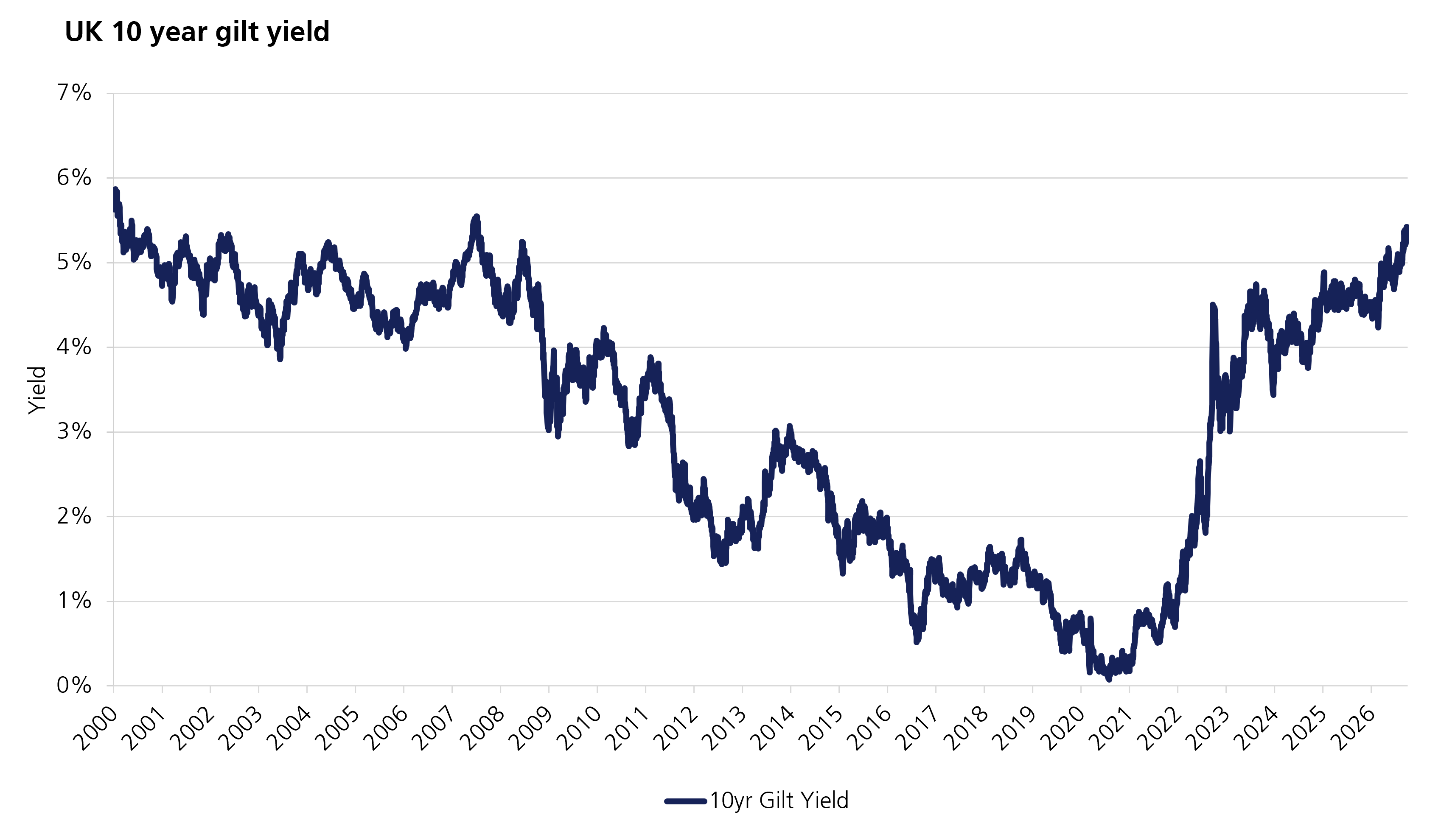
For savers, higher rates improve returns on cash, though that advantage fades once rates fall. For bond investors, prices move inversely to yields, so a hawkish surprise tends to push prices down and a dovish one lifts them. But higher yields also mean more income for new buyers. In 2020, a 10-year gilt yielded less than 1%; today it yields around 5.4%, its highest since the financial crisis (see graph below). Someone investing £10,000 now and holding to maturity would lock in a return of around £540 a year, against under £100 in 2020.1 Our guide to UK government bonds explains this in more detail.
Shares are affected too. Lower rates cut companies' borrowing costs and make future profits worth more today, supporting share prices, particularly where profits lie further ahead. Tightening does the opposite, weighing most on heavily indebted companies. On the other hand, higher rates can also attract overseas money and strengthen a currency, changing the sterling value of international investments, as our guide to currencies examines.
Central banks also affect each other. Rate rises by the Bank of Japan have lifted Japanese 10-year yields to around 3%, a three-decade high. For years, Japanese investors earned almost nothing at home, so they sent large sums abroad, becoming the biggest foreign holders of US government debt and major buyers of gilts. Now they can earn a decent return at home, that money has less reason to leave. With a big buyer stepping back, other governments must offer higher yields to attract investors – one reason yields have risen globally this year.1
This communication is provided for information purposes only. The information presented herein provides a general update on market conditions and is not intended and should not be construed as an offer, invitation, solicitation or recommendation to buy or sell any specific investment or participate in any investment (or other) strategy. The subject of the communication is not a regulated investment. Past performance is not an indication of future performance and the value of investments and the income derived from them may fluctuate and you may not receive back the amount you originally invest. Although this document has been prepared on the basis of information we believe to be reliable, LGT Wealth Management UK LLP gives no representation or warranty in relation to the accuracy or completeness of the information presented herein. The information presented herein does not provide sufficient information on which to make an informed investment decision. No liability is accepted whatsoever by LGT Wealth Management UK LLP, employees and associated companies for any direct or consequential loss arising from this document.
LGT Wealth Management UK LLP is authorised and regulated by the Financial Conduct Authority in the United Kingdom.