
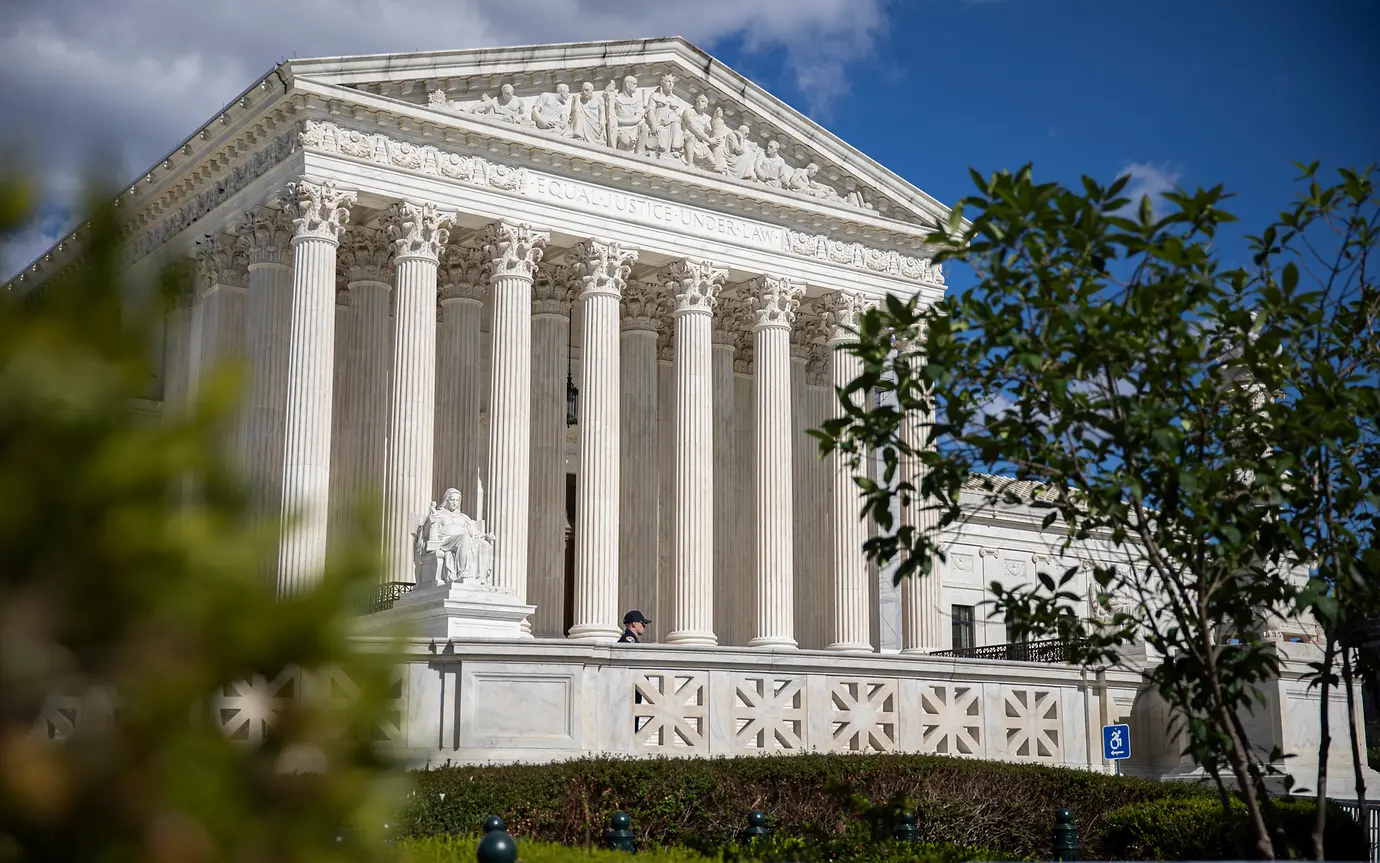
The Supreme Court wields extraordinary power over American life. Although its nine justices do not write laws, their interpretations of the Constitution and federal statutes determine what the government may and may not do, creating binding precedents that shape policy for decades. In practice, this makes the Supreme Court one of the most powerful institutions in the United States.
Historically, however, the Court’s influence on broader financial markets has been limited. Its rulings typically affect individual companies or industries – averaging only a handful of market-moving cases per year – rather than the economy as a whole.1
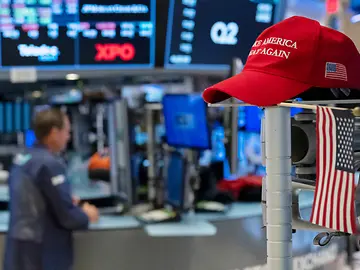
This is now changing. This year, the Supreme Court has emerged as an unexpected actor in financial markets, not through conventional corporate or regulatory disputes, but by confronting fundamental questions about who makes economic policy and under what constraints.
The justices are weighing cases involving presidential tariffs, the independence of the Federal Reserve (Fed), and electoral redistricting, and the consequences could be immediate, from bond market volatility to a potential trillion-dollar refund to importers.
What was once the domain of elected officials and central bankers increasingly rests with the judiciary. As the Court redefines the limits of executive power, its rulings will reverberate far beyond Washington.
The Supreme Court’s hearings over President Donald Trump’s tariffs could have far-reaching consequences for markets. Imposed in April, the tariffs sparked global volatility and prompted a wave of legal challenges from businesses and trade groups. Those challenges have now reached the Supreme Court, which could force the administration to refund an estimated $750 billion to $1 trillion in revenue to importers.2 If the Supreme Court overturns the tariffs – which could happen anytime between now and June – Trump would likely seek alternative statutory authority to preserve his ability to levy duties on foreign goods. Failing that, he would lose an important source of revenue, a development that could ripple through US bond markets and bring debt sustainability back to the forefront.
The stakes extend beyond existing tariffs. Attention has now turned to Greenland, whose strategic importance has grown amid rising geopolitical tensions. Trump has argued that the US must acquire Greenland for national security reasons, even vowing to impose 10% levies on goods imported from eight European nations including the UK, until negotiations led to US control of Greenland.3 However, at the World Economic Forum in Davos, Switzerland, Trump ultimately ruled out using military force, and now says the US has “formed the framework of a future deal” on Greenland after meeting with North Atlantic Treaty Organisation (NATO) chief Mark Rutte.4
Most legal observers expect the Supreme Court to find that the president lacks authority under the International Emergency Economic Powers Act (IEEPA) to impose tariffs on routine international trade – a decision that would significantly constrain Trump’s ability to use trade policy as leverage in geopolitical disputes.5
The Fed’s independence has long been a cornerstone of US monetary policy. Recent developments, however, have placed that autonomy under unprecedented strain.
This week, the Supreme Court is reviewing the case against Fed Governor Lisa Cook, who has been accused of mortgage fraud. The outcome will serve as a critical test of how much latitude the justices are willing to grant a president seeking to remove or pressure members of the central bank’s leadership. Early arguments suggest unease among some conservative justices with the administration’s position – on 21 January, Justice Brett Kavanaugh warned that it would “weaken if not shatter the independence of the Federal Reserve.”6
Earlier this month, the Justice Department issued subpoenas as part of a criminal investigation into Fed Chairman Jerome Powell.7 Prosecutors are examining whether Powell misled Congress during his June testimony about extensive renovations to the Fed’s headquarters in Washington, a project that has run hundreds of millions of dollars over budget. Powell has pushed back forcefully, saying the investigation is a “consequence of the Federal Reserve setting interest rates based on our best assessment of what will serve the public, rather than following the preferences of the president.”8
Legal experts believe the Powell investigation may complicate the administration’s case against Cook, reinforcing the perception that these actions are part of a broader effort to pressure the central bank into lowering borrowing costs.
The uncertainty comes as Powell’s term as chair is due to end in May. Kevin Hassett, Kevin Warsh, Christopher Waller and Rick Rieder are all under consideration as potential successors. While Hassett was initially viewed as the preferred choice, Trump’s recent social media posts suggest the decision remains fluid and increasingly contingent on a candidate’s willingness to deliver rate cuts.
The 2026 US midterm elections will be pivotal. In November, voters will decide on all 435 seats in the House of Representatives and around one-third of the seats in the Senate, determining whether Trump can sustain unified control of Congress. Since returning to the White House one year ago, Trump has benefited from Republican majorities in both chambers, enabling significant legislative victories. A loss of either chamber would curtail his ability to advance legislation.9
As with tariffs and monetary policy, the Supreme Court will play a crucial role in shaping the electoral landscape. In Louisiana v. Callais, the justices are weighing how the Voting Rights Act should be interpreted – specifically, whether states are required to draw congressional districts that ensure minority representation. The ruling could significantly alter electoral maps ahead of the midterms, with lasting consequences for the balance of power in Congress. If successful, the decision would make it easier for Republican-led states to defend maps that dilute minority voting power, likely preserving Republican seats and narrowing Democrats’ paths to House majorities.10
Taken together, these cases mark a decisive shift in where economic and political power now sits in the United States. Decisions once driven by elections, legislation, or technocratic independence are increasingly being resolved in the courts, underscoring the fragmentation in politics.
The Supreme Court is not writing trade policy or setting interest rates. But by defining the limits of presidential authority – over tariffs, the Fed and the mechanics of elections – it is determining who has the power to do so, and how far that power extends. That distinction is now critical for investors, policymakers and foreign governments.
For decades, markets have looked to Congress, the White House and the Fed for signals about economic direction. They are now looking to the Supreme Court as well.
[1 ]Supreme Court Decisions Change the Market by Billions of Dollars - FindLaw
[2] Trump Tariff Ruling: Will Businesses, Importers Get Refunds?
[3] Starmer tells Trump in phone call: Tariff threat over Greenland 'wrong' - BBC News
[4] January 21, 2026 - Trump in Davos | CNN Politics
[5] U.S. Supreme Court ruling on tariffs could derail Trump’s plan to take Greenland | Fortune
[6] 4 Takeaways from Supreme Court Hearing on Trump’s Firing of Fed Official - The New York Times
[7] Statement from Federal Reserve Chair Jerome H. Powell - Federal Reserve Board
[8] Federal Reserve Inquiry Clouds Trump’s Supreme Court Bid to Oust Lisa Cook - The New York Times
[9] What history tells us about the 2026 midterm elections | Brookings
[10] A Supreme Court ruling on Voting Rights Act could help GOP : NPR
This communication is provided for information purposes only. The information presented herein provides a general update on market conditions and is not intended and should not be construed as an offer, invitation, solicitation or recommendation to buy or sell any specific investment or participate in any investment (or other) strategy. The subject of the communication is not a regulated investment. Past performance is not an indication of future performance and the value of investments and the income derived from them may fluctuate and you may not receive back the amount you originally invest. Although this document has been prepared on the basis of information we believe to be reliable, LGT Wealth Management UK LLP gives no representation or warranty in relation to the accuracy or completeness of the information presented herein. The information presented herein does not provide sufficient information on which to make an informed investment decision. No liability is accepted whatsoever by LGT Wealth Management UK LLP, employees and associated companies for any direct or consequential loss arising from this document.
LGT Wealth Management UK LLP is authorised and regulated by the Financial Conduct Authority in the United Kingdom.