
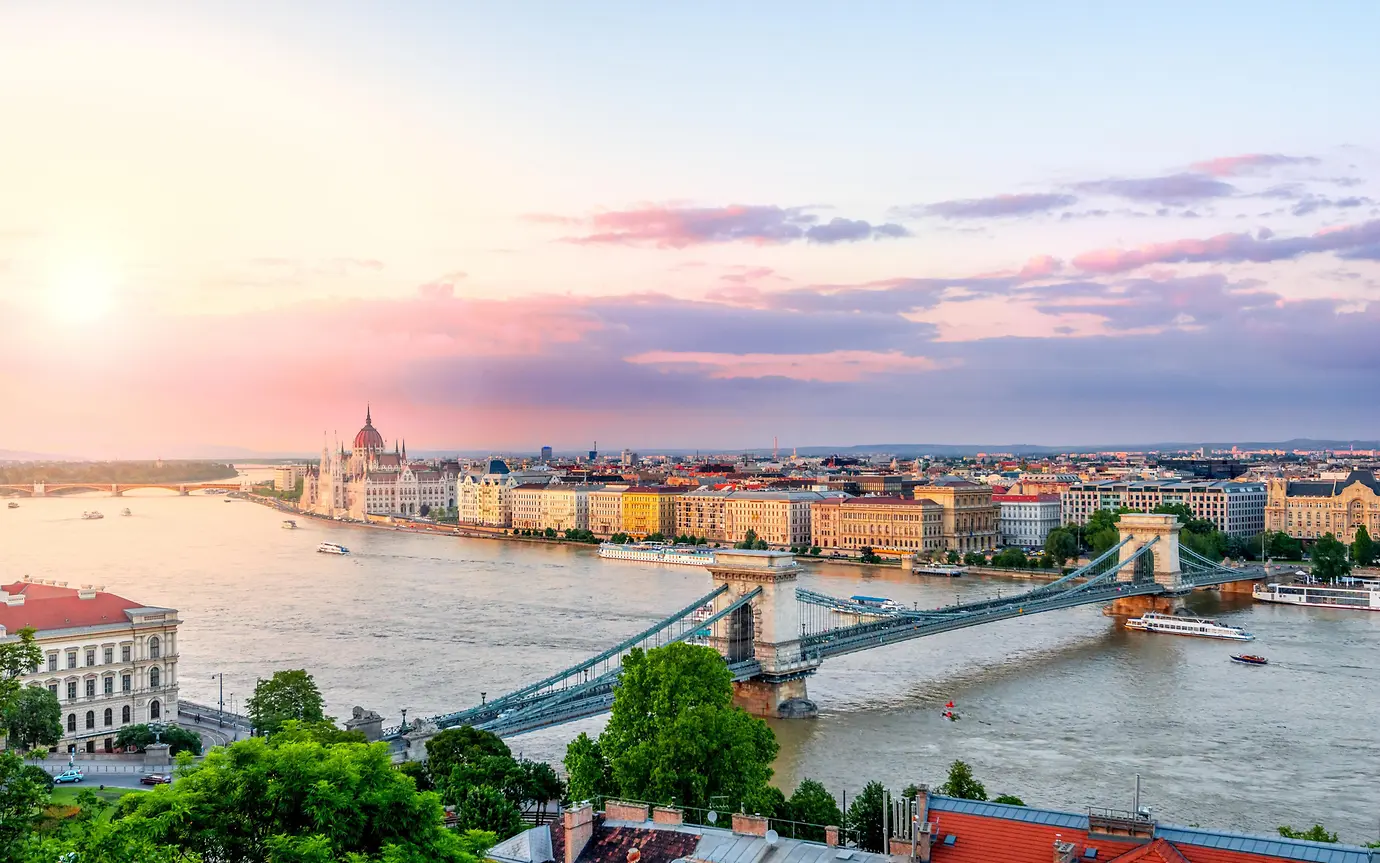
Hungary’s decisive election result – where nearly 80% of the electorate turned out in a vote that ended the incumbent’s 16-year tenure in office – carries implications that extend beyond the country’s borders. In recent years, Hungary has found itself in a particularly important position amid geopolitical crosscurrents.
Viktor Orbán, who led Hungary for 16 consecutive years – longer than any European leader – was defeated by Péter Magyar, a 45-year-old former party insider who convinced voters to bring the “electoral autocracy” to an end. Magyar’s Tisza party won a two-thirds majority of seats in parliament and a share of the vote larger than a single party has received since the fall of communism nearly four decades ago.1
This outcome gives Magyar scope to overturn Orbán’s increasingly unpopular domestic policies and reset Hungary’s global relationships. Orbán has been a close partner of Russia’s President Vladimir Putin, and more recently US President Donald Trump, so much so that US Vice President JD Vance visited Budapest and campaigned on behalf of Orbán in the final week before the election. Orbán was also frequently at odds with the European Union and Ukraine.2
To understand the significance of this result, it is worth revisiting Orbán’s political trajectory. Orbán made his mark on Hungary in the late 1980s, as the Soviet Union began to collapse, by setting up a political movement called Fidesz, the Alliance of Young Democrats.3 He briefly studied liberal political philosophy at the University of Oxford before leaving to campaign in the 1990 elections. Fidesz won 22 seats. As a young MP, Orbán’s party joined the global Liberal International movement in 1992, but his ideology seemed to shift during the second half of the 1990s. At the time, Hungary was governed by a liberal-socialist coalition, and Orbán began repositioning his party towards the centre-right.4
In 1998, Orbán led Fidesz to victory and at 35, became Europe’s youngest prime minister, bringing Hungary into NATO (North Atlantic Treaty Organization) in 1999.5 He lost office twice in 2002 and 2006, but the global financial crisis of 2007/08 paved the way for his return to power in 2010, after which he led Hungary for 16 years.6
During his 16 years in office, Orbán transformed Hungary with sweeping changes to its laws and constitution. He won four elections in a row – more than any other European Union leader7– and made constitutional changes that drew international criticism. Some legislation adopted under Orbán brought Hungary into conflict with the EU, including restrictions on civil society organisations and the refusal to implement EU migration policies.8
In July 2015, as refugees and migrants entered the EU through Hungary’s borders, Orbán drew a “clear link between illegal immigrants coming to Europe and the spread of terrorism”. He stated, “We would like to keep Europe for Europeans… also we want… to preserve Hungary for Hungarians.”9
The European Commission took legal action against Hungary on several occasions.10 In March, Orbán refused to drop his opposition to a €90 billion loan for Ukraine. EU leaders voiced their frustrations with Orbán who refused to sign off on the loan agreed in 2025.11
Hungary’s energy policy under Orbán also faced criticism from the EU, as it centred on maintaining Russian oil and gas supplies even after Russia invaded Ukraine. Orbán was critical of the EU’s efforts to reduce its dependence on Russian supplies following the 2022 invasion. By September 2022, a European Parliament report stated that Hungary could no longer be considered a full democracy and labelled it an elected autocracy.12
With Orbán’s long tenure now over, attention turns to Hungary’s new leadership. Some argue that Hungary’s right-wing leader simply stopped being popular. Orbán and other right-wing politicians who lose popularity tend not to follow the Russian principle that politics involves strain between “the television” – propaganda – and “the refrigerator” – people’s lived reality.13 The day after the election, Magyar reiterated this, saying, “For years, Viktor Orbán has paid no attention to the problems affecting Hungarians.”14
Magyar campaigned on a platform of distancing Hungary from Russia in favour of closer ties with the EU and Ukraine. On 12 April, he told supporters that his priority was to dismantle parts of Orbán’s system, including replacing Fidesz-aligned heads of the Supreme Court, the prosecution service and various independent agencies overseeing the media, the judiciary, the state budget and policing of anti-competition laws.15 Magyar also said Hungary would rejoin the European Public Prosecutor’s Office, a wing of the European Union that investigates financial crimes. This would allow investigators the authority to examine fraud cases involving the previous administration, including members of Orbán’s family.16
Hungarian equities surged to their best day since 2022, despite broader losses across European assets. The Hungarian forint was the strongest performing global currency on 13 April, rising nearly 4% against the dollar.17
As for the geopolitical outlook, it is still early days. Hungary may distance itself from Russia and move closer to the EU and Ukraine, as per Magyar’s campaign promise. How Magyar’s relationship with Trump and the US will evolve, remains uncertain.
Hungary’s election is a reminder that extended political cycles – even those that appear firmly entrenched – can shift quickly. For investors, the key question is not ideology but political direction and whether a change in leadership can translate into greater institutional alignment with major trading partners, improved access to EU funding and a more predictable regulatory backdrop.
Hungary’s vote comes at a pivotal moment for European foreign policy. EU discussions over additional financial and military support for Ukraine have required unanimous agreement, with Hungary under Orbán often acting as a constraint on further assistance. A change in government therefore raises the possibility of smoother decision-making on future Ukraine aid packages and broader EU defence coordination.
At the same time, the geopolitical backdrop is becoming more complex. Russia’s deepening cooperation with Iran – including reported intelligence-sharing and broader security coordination – is contributing to a realignment of strategic relationships between the Middle East, Europe and the US. This has reinforced concerns among policymakers that the conflict in Ukraine is becoming more interconnected with other tensions, which could potentially influence how Western government prioritise military and financial resources.
While the shift in Hungary may be viewed as constructive for EU cohesion and potentially for coordination on Ukraine, it also comes against a backdrop of an increasingly multipolar global order. The loss of a frequently used intermediary negotiating position between the US, the EU and Russia could have wider-ranging consequences, potentially reshaping how emerging geopolitical blocs interact or align over time.
For now, markets are responding to the prospect of stronger growth as democratic institutions are bolstered. More broadly, investors will be closely watching how Russia responds to the likely rapprochement Hungary will seek with the EU and the potential ripple effects.
[1] Orbán era swept away by Péter Magyar's Hungary election landslide - BBC News
[2] Orbán era swept away by Péter Magyar's Hungary election landslide - BBC News
[3] Who is Viktor Orban, Hungarian PM with 14-year grip on power? - BBC News
[4] Who is Viktor Orban, Hungarian PM with 14-year grip on power? - BBC News
[5] Who is Viktor Orban, Hungarian PM with 14-year grip on power? - BBC News
[6] Who is Viktor Orban, Hungarian PM with 14-year grip on power? - BBC News
[7] How Orban Lost His Touch, and Hungary’s Election - The New York Times
[8] Hungary under Viktor Orbán: Developments and EU reaction since 2022 - House of Commons Library
[9] Who is Viktor Orban, Hungarian PM with 14-year grip on power? - BBC News
[10] Hungary under Viktor Orbán: Developments and EU reaction since 2022 - House of Commons Library
[11] Hungary's Orbán accused of disloyalty and blackmail over Ukraine loan veto - BBC News
[12] Hungary under Viktor Orbán: Developments and EU reaction since 2022 - House of Commons Library
[13] How Orban Lost His Touch, and Hungary’s Election - The New York Times
[14] How Orban Lost His Touch, and Hungary’s Election - The New York Times
[15] How Peter Magyar Defeated Viktor Orban, a Former Ally, In Hungary’s Election - The New York Times
[16] How Peter Magyar Defeated Viktor Orban, a Former Ally, In Hungary’s Election - The New York Times
[17] Deutsche Bank
This communication is provided for information purposes only. The information presented herein provides a general update on market conditions and is not intended and should not be construed as an offer, invitation, solicitation or recommendation to buy or sell any specific investment or participate in any investment (or other) strategy. The subject of the communication is not a regulated investment. Past performance is not an indication of future performance and the value of investments and the income derived from them may fluctuate and you may not receive back the amount you originally invest. Although this document has been prepared on the basis of information we believe to be reliable, LGT Wealth Management UK LLP gives no representation or warranty in relation to the accuracy or completeness of the information presented herein. The information presented herein does not provide sufficient information on which to make an informed investment decision. No liability is accepted whatsoever by LGT Wealth Management UK LLP, employees and associated companies for any direct or consequential loss arising from this document.
LGT Wealth Management UK LLP is authorised and regulated by the Financial Conduct Authority in the United Kingdom.