

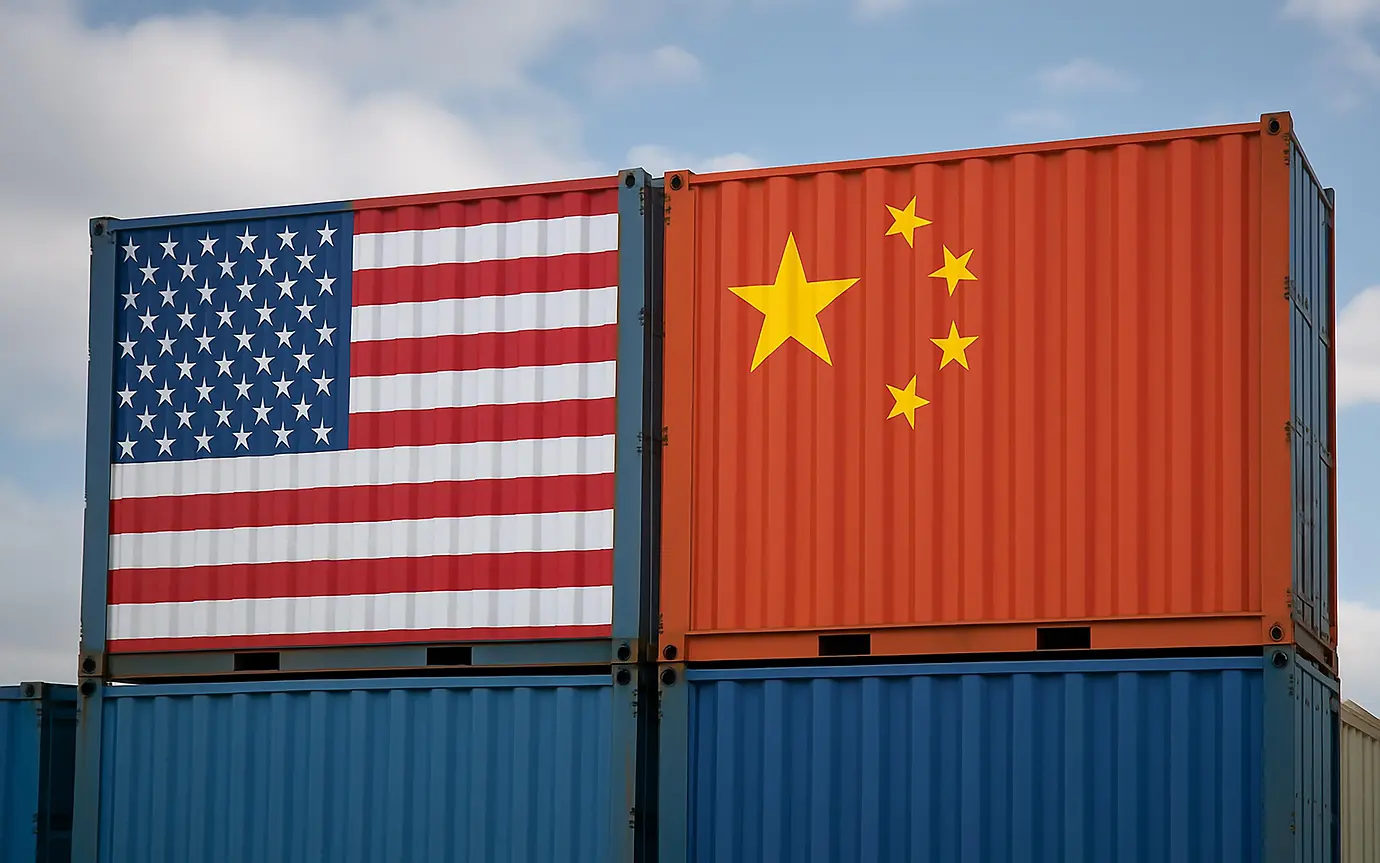
US and China relations have been a source of geopolitical tension in recent years. What was once a primarily trade relationship that enabled US consumers to buy cheaper Chinese goods, and consequently boosted the Chinese economy, is now increasingly shaped by competition over technology, critical minerals and global influence. This came to the forefront last week when US President Donald Trump and Chinese President Xi Jinping met in Beijing.
For investors, this evolving relationship matters because it is leading to the reshaping of supply chains and the alteration of capital spending priorities. Within this shifting landscape, there has been an increased focus on areas where China retains leverage, namely around rare earth minerals, as it refines and produces most of the world’s supply of these metals, which are essential in a variety of crucial sectors such as smartphones, semiconductors and defence.
Simultaneously, the ongoing legal challenges to Trump’s tariff programme add another layer of uncertainty for investors and corporations attempting to forecast longer-term investment decisions. The result is a more fragmented and politically driven global economy, which has broad investment implications.
One of the biggest shifts in US foreign policy over the past decade has been the move away from viewing China primarily as a trading partner to treating it as a competitor.
This shift began during Trump’s first term when he implemented several tariffs on Chinese aluminium, solar panels, electric vehicles and steel – evolving to include nearly all other Chinese goods in 2018.1 President Joe Biden continued with this approach, often describing the US/China relationship as a policy of “strategic competition” or “strategic rivalry”. The aim was to limit China’s access to advanced technology, reduce US dependence on Chinese supply chains and strengthen alliances across Asia. Tariffs became one part of a broader economic strategy that also included semiconductor restrictions, investment controls and industrial subsidies through measures such as the CHIPS Act.2 What started as a Republican initiative became bipartisan.
Trump has continued his widespread tariff implementation during his second term, announcing tariffs on all the US’s trading partners, but with particularly high levies imposed on China, briefly reaching highs of 145%. But China had been here before and was better prepared in its response, which included curtails on rare earth mineral exports. These minerals are essential in advanced manufacturing and are used in everything from electric vehicles to semiconductors and defence systems. The US has spent years trying to reduce its reliance on China, but China remains dominant in processing rare earth metals.3 China seemingly exercised its leverage and tariffs were lowered to 30%.4
The tariff regime continues to unfold, but it faced fresh setbacks on 7 May after a panel of federal judges ruled that the 10% tariff on most US imports was illegal.5 In the split ruling, the Court of International Trade found Trump had wrongly invoked a decades-old trade law when he applied these duties in February. Apart from the fact that the government will likely have to refund the monies already raised from tariffs – a process that will be expensive, extensive and time-consuming – this latest court ruling means Trump appears to have lost one of his negotiating tools, for now.
While the court declared Trump's tariffs to be illegal, it only explicitly blocked their collection from small businesses and some states that had sued over their legality. It remains unclear how the administration will interpret this order, and they are widely expected to appeal.6 The likelihood of appeals and ongoing legal disputes reinforces the unpredictability of US trade policy, which may discourage long-term corporate investment decisions.
This set the stage for the summit in Beijing between Trump and Xi last week. Trade was on the agenda, with Xi saying the two sides should expand cooperation in areas like agriculture, signalling China may be ready to purchase more American soybeans, beef and Boeing aircraft, but there are no confirmed details of any deals.7
Iran was also discussed during the visit. Trump reportedly asked Xi to play a constructive role in reopening the Strait, given China’s economic ties with Iran and its dependence on Middle Eastern energy supplies. However, despite positive messages from Trump after the meetings, Xi’s tone was more subdued indicating that a breakthrough is not imminent.8
For markets, any progress on peace in the Middle East could reduce risks to global energy supply chains and limit oil volatility. However, the lack of a breakthrough reinforces how fragile the current geopolitical backdrop remains. Investors will therefore continue pricing in a higher geopolitical risk premium across energy markets, shipping, global trade and inflation-sensitive assets.
During the talks, Xi warned Trump that the issue of Taiwan is still top of mind, with Xi pressuring Trump to delay or stop arms sales to Taiwan.9
Growing US involvement in the Middle East – combined with domestic political and legal constraints on trade policy – may curtail Washington’s ability to sustain simultaneous confrontations. It is possible that China may feel emboldened to take a more aggressive stance on Taiwan as a result. This does not mean conflict is more likely in the near term, but it does underscore the importance of Taiwan as a source of geopolitical uncertainty for markets over the longer term.
An escalation in tensions over Taiwan could cause supply chain disruption in advanced chips. Taiwan is home to the Taiwan Semiconductor Manufacturing Company (TSMC), which manufactures a significant share of the world’s most advanced semiconductors used in everything from smartphones to AI systems. Any conflict or blockade could disrupt production and shipping, with few alternative suppliers able to replace that capacity quickly.
Even without a near-term conflict, the growing strategic focus on Taiwan is already encouraging companies and governments worldwide to diversify semiconductor production into the US, Japan and Europe. This would likely support long-term investment in domestic manufacturing and supply chain resilience, but also create higher costs and more fragmented global trade.
As the Strait of Hormuz remains mostly shut, investors were looking for more constructive relations between the US and China to help mitigate the sharp increases in certain commodity prices. The summit concluded with limited formalised action points, with a potential resumption of the military campaign in Iran leaving investors grappling with concerns about extended supply chain disruptions. While both leaders hailed the summit as a success, markets remain unconvinced as the move towards more fragmented global trade continues.
[2] Signed into law in August 2022, the Creating Helpful Incentives to Produce Semiconductors (CHIPS) and Science Act intended to lure microchip manufacturing back to the US after several decades of individual companies offshoring the technology.
[3] Trump in China: Xi Jinping welcomes US president but thorny issues remain - BBC News
[4] Trump in China: Xi Jinping welcomes US president but thorny issues remain - BBC News
[5] Trade Court Rules Trump’s 10% Global Tariff Is Illegal - The New York Times
[6] Trade Court Rules Trump’s 10% Global Tariff Is Illegal - The New York Times
[7] Trump in China: Xi Jinping welcomes US president but thorny issues remain - BBC News
[8] Trump in China: Xi Jinping welcomes US president but thorny issues remain - BBC News
[9] Trump-Xi summit: US and China conclude 'very successful' talks but few deals confirmed - BBC News
This communication is provided for information purposes only. The information presented herein provides a general update on market conditions and is not intended and should not be construed as an offer, invitation, solicitation or recommendation to buy or sell any specific investment or participate in any investment (or other) strategy. The subject of the communication is not a regulated investment. Past performance is not an indication of future performance and the value of investments and the income derived from them may fluctuate and you may not receive back the amount you originally invest. Although this document has been prepared on the basis of information we believe to be reliable, LGT Wealth Management UK LLP gives no representation or warranty in relation to the accuracy or completeness of the information presented herein. The information presented herein does not provide sufficient information on which to make an informed investment decision. No liability is accepted whatsoever by LGT Wealth Management UK LLP, employees and associated companies for any direct or consequential loss arising from this document.
LGT Wealth Management UK LLP is authorised and regulated by the Financial Conduct Authority in the United Kingdom.