
For decades, companies went public relatively early in their growth journeys. By floating their shares on an exchange – a process known as an initial public offering (IPO) – retail investors could buy shares, allowing them to participate in value creation as these firms expanded from promising businesses into global business leaders. That pattern has changed.
The emergence of AI, cloud computing and digital platforms has enabled some companies to reach extraordinary scale before listing. Recent fundraising rounds for companies such as Anthropic, creator of Claude – which raised $65 billion at a post-money valuation of $965 billion in late May – illustrate how private businesses can now attract tens of billions of dollars in capital.
The result is a new category of company: the private market mega-cap. This week, we will look at how the upcoming SpaceX IPO and Anthropic’s record-breaking fundraising highlight a broader shift in capital markets, and what the rise of mega-IPOs means for investors, market concentration and the future of public markets.
Historically, investors could access high-growth companies relatively early through public markets. This led to substantial IPO activity during the late 1990s, which ultimately culminated in the dot-com bubble.
Today, deep pools of private capital – from venture funds, sovereign wealth funds, pension funds and institutional investors – allow companies to fundraise before facing scrutiny from public markets. This insulates company founders from the possibility of being removed from leadership, something Steve Jobs famously experienced at Apple in 1985 after poor share price performance led to a power struggle with then-CEO John Sculley, which drove the board to force him out. Jobs returned as CEO in 1997.
Now, the founders of Anthropic, OpenAI and SpaceX have opted to retain control as they are able to fund their growth from other sources and are using public markets to provide liquidity and broaden ownership. Should these companies become entirely free-floating – with most of their shares freely tradable on public markets – their expected market capitalisations would place them among the largest listed companies worldwide. Consequently, IPOs are increasingly serving as a mechanism for investors to convert their shares more quickly into cash, rather than as a first stage of growth funding.
Even though many leading technology firms remain private, concentration within public markets is already at historic highs. A small group of technology companies account for a large share of major equity index weights – Apple, Microsoft, Amazon, Alphabet, Meta, Nvidia and Tesla collectively make up roughly one-third of the S&P 500 and more than 40% of the Nasdaq.
When private companies such as SpaceX, Anthropic and OpenAI list their shares, their inclusion could further increase this index concentration, depending on their eventual market capitalisations and index eligibility.
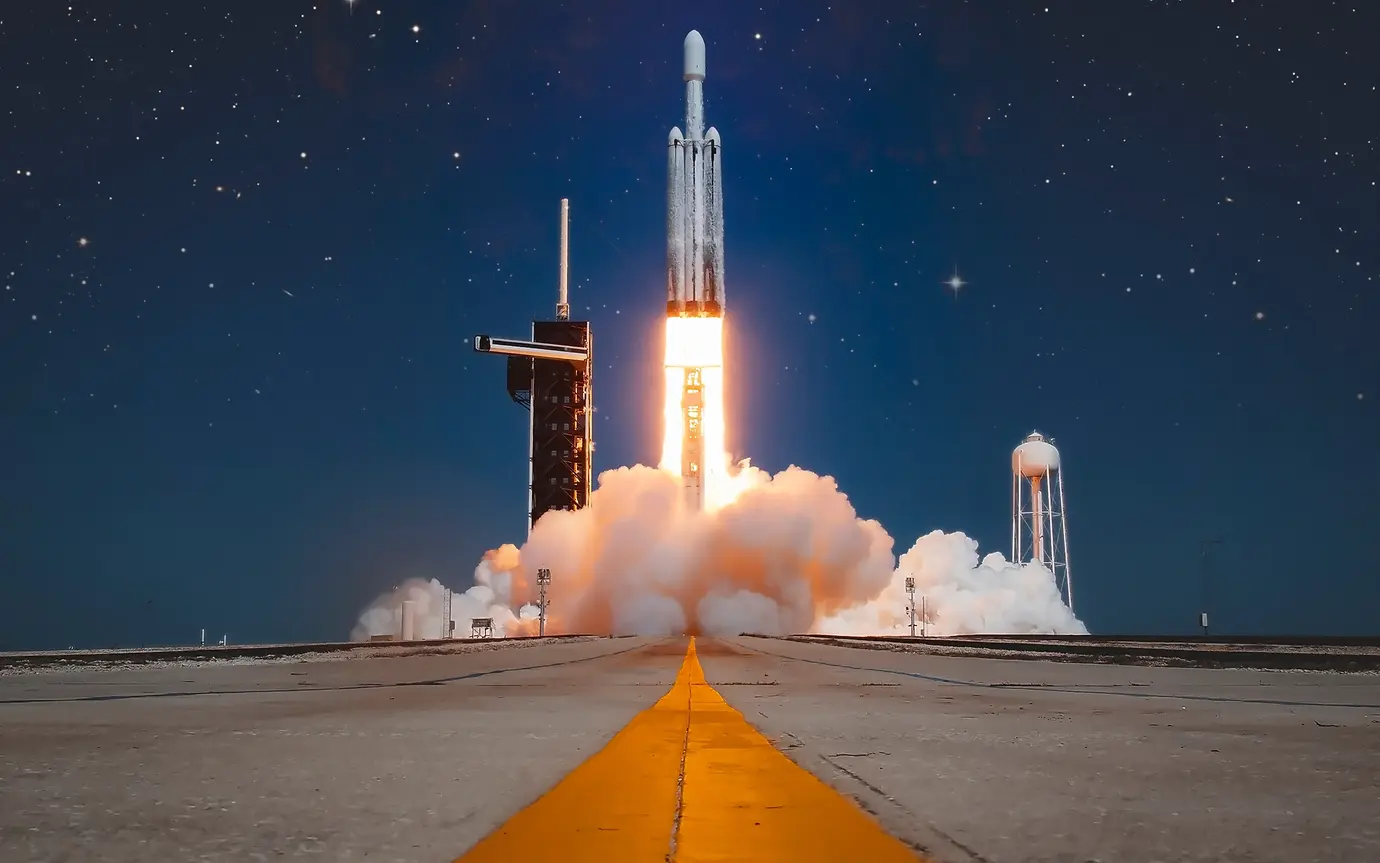
However, it is worth noting that some of these concentration concerns may be nuanced. SpaceX, which is due to list on 12 June with a reported valuation of around $1.8 trillion, is only expected to raise $75 billion as it plans to sell a relatively small portion of its shares to the public. Despite its plans to list a fraction of its shares, it would still be the largest IPO in Wall Street history.
Under the existing rules used by major index providers, newly public companies are generally expected to establish a trading history before being admitted to flagship benchmarks. The S&P 500 usually requires companies to be publicly listed for at least a year and demonstrate sustained profitability under standard accounting rules, which are currently under review. Most major indices also require a meaningful proportion of shares to be available for public trading, ensuring that these underlying companies can be bought and sold easily by funds. SpaceX falls short on all three hurdles: it will have only just listed, it reported large losses last year, and only a small fraction of its shares are expected to trade freely.
What has made the situation unusual is that several index providers have either already changed their rules or are considering doing so.
Nasdaq changed its rules to allow newly listed companies that are already ranking in the top 40 by market value to join the Nasdaq after just 15 trading days, while also eliminating its minimum free-float requirement. Consequently, depending on how the index rules evolve, SpaceX is expected to represent between 0.5% and 1% of the index once admitted.
The most consequential decision rests with the S&P 500, which will decide on 8 June whether to relax its requirements. Even if the S&P 500 adopts every proposed change, SpaceX would still not be eligible for inclusion until roughly six months after its June listing. Furthermore, as the S&P 500 Index uses a float-adjusted market capitalisation weighting – which weights companies based on the market value of their publicly traded shares – SpaceX would only represent a small proportion of the index, given the low number of shares available. However, this weighting would likely increase over time if existing shareholders sell shares, thereby increasing the public float and the proportion of SpaceX shares available for trading.
Once a stock enters a major index, passive funds that track the index are forced to buy its shares to replicate the index composition. For SpaceX, that could see incremental demand of $8-$12 billion from S&P 500 trackers alone once admitted. Bloomberg Intelligence estimates that S&P 500, Russell and Nasdaq funds would together need more than 40% of the company’s available float – an extraordinary level of automatic demand for a stock with so few shares in public hands.
The prospect of trillion-dollar IPOs such as SpaceX raises questions that extend well beyond a single company, including deepening concentration in equity markets, the future of passive investing and index construction. If index providers relax long-standing eligibility requirements, enormous pools of passive capital could flow quickly into newly listed companies. For stocks with only a limited number of shares available, this could amplify volatility and distort price discovery for a time. Focus will remain on how these index rules evolve.
However, there are clear benefits. For years, public-market investors seeking exposure to the AI boom have largely been limited to owning the infrastructure providers – chipmakers, cloud platforms and data-centre operators. The prospect of Anthropic and OpenAI listing would broaden the opportunity set and allow retail investors to gain more direct exposure to standalone AI businesses.
Demand for passive products has grown substantially. However, the emergence of mega-IPOs may create implementation challenges for ETF and index fund providers, as adding exposure to newly listed companies can create significant portfolio turnover and potentially erode returns.
These historic fundraises are garnering enormous amounts of attention and will be a test of how passive products adapt to these mega-IPOs. Corporate governance may also come into focus. While founder control may support long-term strategic decision-making, the retention of voting rights may become an increasingly important governance consideration over time as companies mature and public shareholders have limited ability to influence management.
This communication is provided for information purposes only. The information presented herein provides a general update on market conditions and is not intended and should not be construed as an offer, invitation, solicitation or recommendation to buy or sell any specific investment or participate in any investment (or other) strategy. The subject of the communication is not a regulated investment. Past performance is not an indication of future performance and the value of investments and the income derived from them may fluctuate and you may not receive back the amount you originally invest. Although this document has been prepared on the basis of information we believe to be reliable, LGT Wealth Management UK LLP gives no representation or warranty in relation to the accuracy or completeness of the information presented herein. The information presented herein does not provide sufficient information on which to make an informed investment decision. No liability is accepted whatsoever by LGT Wealth Management UK LLP, employees and associated companies for any direct or consequential loss arising from this document.
LGT Wealth Management UK LLP is authorised and regulated by the Financial Conduct Authority in the United Kingdom.