
Over the past few years, investors have watched a series of disruptions ripple through global trade. Most recently, the conflict in the Middle East has exposed the fragility of the supply chains that underpin the modern economy, namely through the ongoing disruption in the Strait of Hormuz. As the US and Iran exchange fresh strikes over Hormuz, concerns are mounting for another critical chokepoint in the region, the Bab el-Mandeb Strait, which has again come under threat from the Houthis. They struck two Saudi Arabian oil tankers on Thursday which sent Brent prices above $100 a barrel, its highest level in nearly two months, and unsettled markets.
At first glance, these appear to be isolated incidents. In reality, they all expose the same vulnerability: much of the world’s trade depends on a surprisingly small number of maritime chokepoints.
For decades, globalisation benefited from open, predictable and secure maritime trade. Shipping had become reliable and inexpensive, so companies optimised supply chains for cost efficiency rather than resilience. But that assumption is now being challenged. This article explores how centuries of naval history gave rise to today’s global trading system, why a handful of waterways are critical to the modern economy, and what the return of geopolitical risk means for companies, markets and long-term investment opportunities.
From the late fifteenth century until the nineteenth century, oceans were highly dangerous. Piracy was common, merchant vessels were routinely preyed upon by rival navies and state-sanctioned privateers, and maritime empires competed for control. At this point in history, the main items traded were high-value commodities such as spices, silk, and precious metals – goods valuable enough to justify long and hazardous sea voyages.
This began to change after Britain’s victory in the Napoleonic Wars in 1815. During the nineteenth century, the Royal Navy established unrivalled command of the world’s oceans. During this period known as Pax Britannica, the UK suppressed piracy, protected merchant shipping and kept many of the world’s major sea lanes open. After the Second World War, that role largely passed to the United States. Under Pax Americana – a period of US-led global stability in which American economic and military power helped secure international trade routes – the US Navy underpinned an international trading system in which freedom of navigation was assumed rather than questioned.
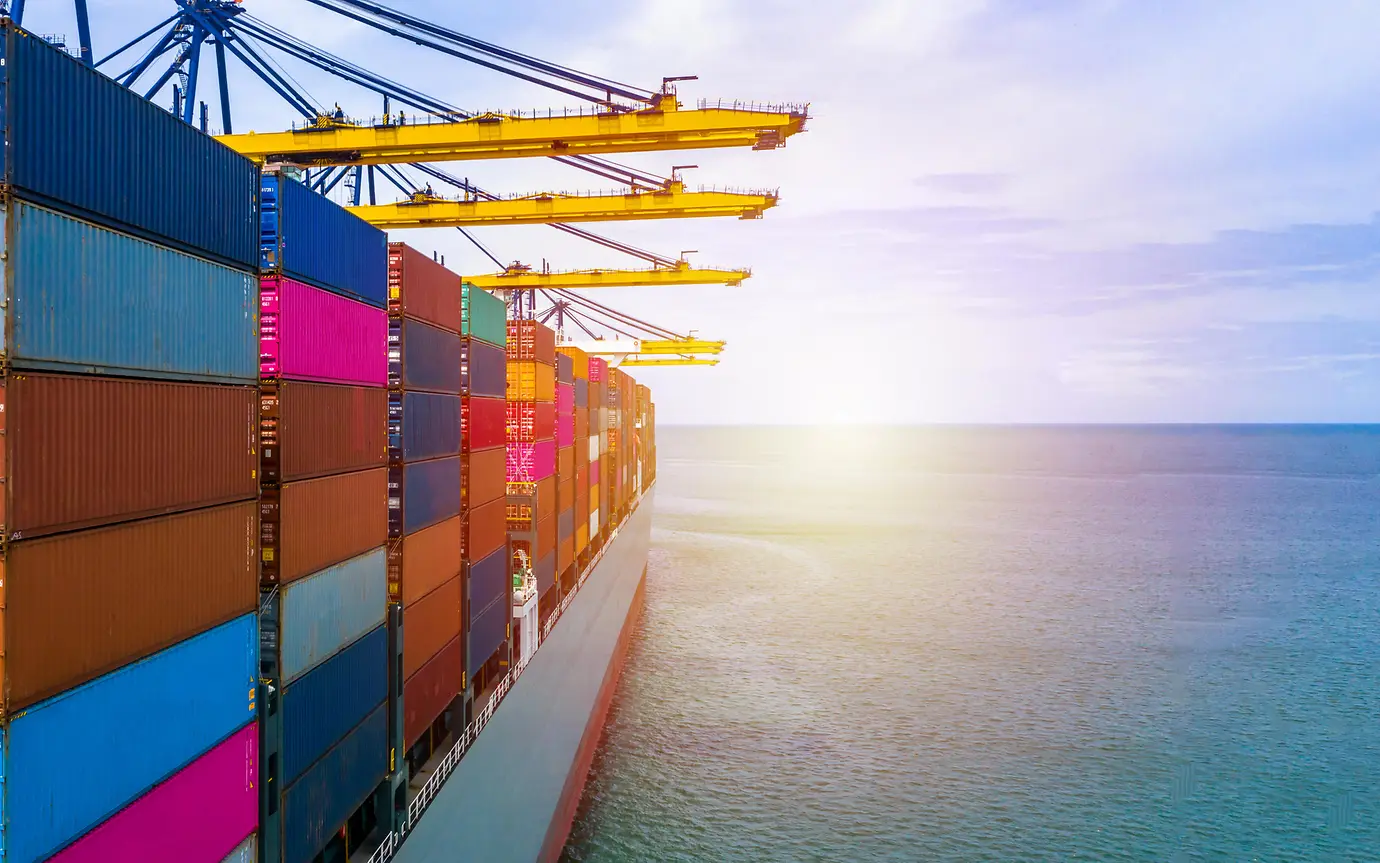
It was this unprecedented period of maritime security that made modern globalisation possible. Businesses optimised supply chains around the assumption that goods could move cheaply and predictably through a handful of strategic waterways – from the Strait of Malacca and the Suez Canal to the Panama Canal and the Strait of Hormuz.
Beginning in the 1950s and accelerating through the 1980s and 1990s, falling trade barriers, containerisation and advances in logistics encouraged companies to fragment production across multiple countries. Rather than manufacturing products in a single factory, firms increasingly located each stage of production where it could be done most efficiently and cheaply. Raw materials might come from Australia, components from China, semiconductors from Taiwan, final assembly from Vietnam and consumers in Europe and the United States.
This gave rise to the modern global supply chain. Rather than keep expensive stockpiles, companies could minimise inventories and rely on frequent, reliable deliveries. Many companies embraced this “just-in-time” manufacturing as it reduced costs, improved efficiency and helped keep inflation low. But it depended on a crucial assumption: that the world’s shipping lanes would remain open, predictable and inexpensive.
Maritime security became so reliable that it was largely invisible to the businesses that depended on it. That assumption began to break down in the twenty-first century. The Covid pandemic exposed the fragility of these supply chains as factories closed, ports became congested and shipping costs surged. In 2021, the grounding of the Ever Given in the Suez Canal demonstrated how a single vessel could disrupt global commerce.1 Then in late 2023, a combination of drought that reduced the capacity through the Panama Canal and ongoing attacks on commercial shipping in the Red Sea by the Iran-backed Houthi movement in Yemen forced vessels to divert thousands of miles around the Cape of Good Hope at the southern tip of Africa.2
More recently, the US-Israeli conflict with Iran has renewed concerns over the Strait of Hormuz, through which nearly a quarter of the world’s oil and liquefied natural gas exports pass daily. Given the involvement of the Houthis this week, concerns are now mounting over the Bab el-Mandeb Strait, another critical maritime chokepoint which serves as a key transit route for oil shipments moving from the Persian Gulf through the Suez Canal to Europe and beyond.
For decades, investors largely viewed globalisation as an irreversible force. Manufacturing would continue migrating to the lowest-cost locations, shipping would remain cheap, and geopolitical risk would be largely confined to defence contractors and energy markets. The assumption that goods could move freely around the world became embedded in robust earnings, inflation forecasts and corporate strategy.
But that assumption is now being questioned. Rather than representing isolated shocks, disruptions in the Suez Canal, Panama Canal, Red Sea and Strait of Hormuz reveal a common vulnerability: a significant proportion of global trade relies on a small number of maritime chokepoints. As geopolitical rivalry intensifies, these routes are becoming strategic assets once again rather than invisible infrastructure.
For investors, this has implications that extend well beyond the shipping industry. Companies are increasingly prioritising resilience, which includes holding larger inventories, diversifying suppliers, relocating production closer to end markets and creating backup capacity to reduce disruption. These changes may increase costs to businesses, but they crucially reduce exposure to geopolitical risks.
Logistics providers, industrial automation companies, domestic manufacturers, defence contractors, energy infrastructure businesses and firms helping companies redesign supply chains will likely benefit. Meanwhile, businesses that rely solely on ultra-cheap global production may find their margins coming increasingly under pressure.
History suggests that secure sea lanes should not be taken for granted. For most of the past five centuries, maritime trade was shaped by conflict, piracy and competition between great powers. The relatively frictionless trading system that emerged under Pax Britannica and later Pax Americana was unusual rather than inevitable.
Today’s disruptions are reminders that geography still matters. Globalisation is not ending, but it is changing.
In the next phase, companies’ priorities will likely include resilience over efficiency, security over cost minimisation and diversified supply chains over just-in-time optimisation. Understanding where the world’s critical chokepoints are and how businesses adapt to them may become an increasingly important part of assessing long-term investment opportunities.
[1] Egypt's Suez Canal blocked by huge container ship - BBC News
This communication is provided for information purposes only. The information presented herein provides a general update on market conditions and is not intended and should not be construed as an offer, invitation, solicitation or recommendation to buy or sell any specific investment or participate in any investment (or other) strategy. The subject of the communication is not a regulated investment. Past performance is not an indication of future performance and the value of investments and the income derived from them may fluctuate and you may not receive back the amount you originally invest. Although this document has been prepared on the basis of information we believe to be reliable, LGT Wealth Management UK LLP gives no representation or warranty in relation to the accuracy or completeness of the information presented herein. The information presented herein does not provide sufficient information on which to make an informed investment decision. No liability is accepted whatsoever by LGT Wealth Management UK LLP, employees and associated companies for any direct or consequential loss arising from this document.
LGT Wealth Management UK LLP is authorised and regulated by the Financial Conduct Authority in the United Kingdom.